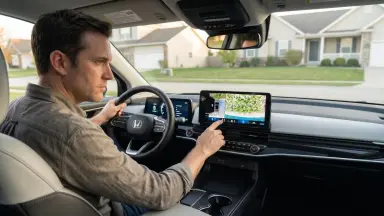
When a Rearview Camera Recall Becomes a Lemon Law Case: What the 2026 Wave Means for Drivers

Need a Consumer Protection Attorney?
Get matched with pre-screened attorneys in your area. Free to use, no obligation.
Get Matched Free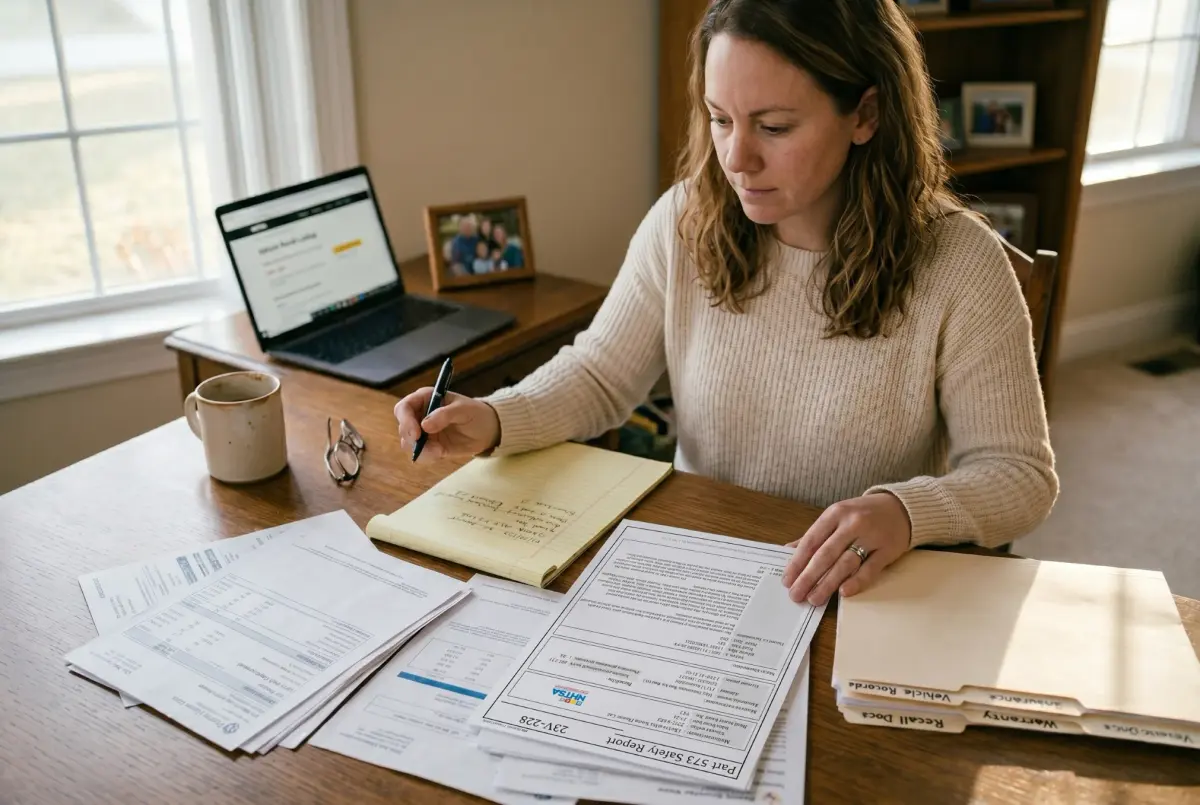
The rearview camera has become the most-recalled component in the U.S. auto industry in 2026. As of late May, six manufacturers have recalled more than 2.8 million vehicles in the United States this year alone over rearview camera defects — Honda's May 21 recall of 59,887 Prologue and Acura ZDX SUVs is the latest, and the second rearview camera recall to hit the Prologue/ZDX platform in three months. For consumers, that pattern is more than a news cycle: when a federally required safety component fails repeatedly, the legal framework shifts from "wait for the recall repair" to "you may have a substantial-defect claim under your state's lemon law and the federal Magnuson-Moss Warranty Act."
The article below reviews the data behind the trend, the legal categories that apply, and the specific conditions under which a defective rearview camera moves from a recall remedy to a consumer claim. The Honda recall is used as the working example because two recalls on the same models in three months is the cleanest illustration of the pattern.
The 2026 Rearview Camera Recall Wave: What the Data Shows
The trend is documented in NHTSA's recall filings. Between January and May 2026, six automakers filed recall campaigns covering rearview camera defects affecting more than 2.8 million vehicles. The largest are summarized below.
| MANUFACTURER | NHTSA CAMPAIGN | VEHICLES | AFFECTED DEFECT TYPE |
| Ford (May) | 25V-315 | 1,075,299 | APIM software freeze |
| Audi (Dec 2025) | 25V900 | 356,649 | Driver-assistance software fault |
| Ford (March) | 26V123 | 339,619 | Image processing module reset |
| GM (Chevrolet Malibu) | 26V212 | 271,000+ | Display distortion or blank screen |
| Tesla | 26V283 | 218,868 | Camera image delay on startup |
| Porsche | 25V901 | 173,538 | Display software fault |
| Hyundai (Santa Fe) | 25V-714 | 143,472 | Camera display failure |
| Honda/Acura | 26V306 | 59,887 | Camera housing moisture corrosion |
Two patterns stand out in the 2026 data. First, the defects span hardware and software roughly evenly — Honda's case is a manufacturing problem in the camera housing, Tesla's is a firmware bug, Ford's involves a computational overload in an image processing module. The shared category, "rearview camera does not display," is reached through very different technical paths. Second, the same vehicle platforms are appearing in multiple recalls within months of each other — Ford's Explorer and Lincoln Aviator have featured in three separate camera-related campaigns since March 2026, and Honda's Prologue and Acura ZDX appeared in two within three months.
That repetition matters legally, because state lemon laws and the federal Magnuson-Moss Warranty Act both turn on a "reasonable number of repair attempts" standard. When a recall is the third or fourth time a manufacturer has tried to fix the same functional defect on the same vehicle, the consumer's path widens.
Why the Rearview Camera Sits in a Special Legal Category
Under Federal Motor Vehicle Safety Standard 111 (FMVSS 111, the federal rule that governs rear visibility), every U.S. passenger vehicle with a gross vehicle weight rating of 10,000 pounds or less, manufactured on or after May 1, 2018, must be equipped with a rearview visibility system that meets specific field-of-view requirements. The standard exists because of the Cameron Gulbransen Kids Transportation Safety Act of 2007, federal legislation passed in response to backover fatalities involving small children. The rearview camera is not a convenience feature in the eyes of federal law — it is required safety equipment, comparable in regulatory status to seat belts and airbags.
This classification has a direct consequence for consumer claims. State lemon laws typically require that a defect "substantially impair" the vehicle's use, value, or safety to qualify the vehicle as a lemon. Courts and consumer protection attorneys have repeatedly treated failures of federally mandated safety equipment as per-se substantial impairment, because the equipment is required by law to be present and functional. A non-working rearview camera meets that threshold even when no crash has occurred, because the impairment is to safety as defined by federal regulation.
The federal Magnuson-Moss Warranty Act (15 U.S.C. § 2301 et seq., the federal law that governs written warranties on consumer products) adds a second layer. The act allows a consumer to sue the manufacturer when a product covered by a written warranty cannot be brought into conformity with that warranty after a reasonable number of repair attempts. It applies to most consumer products including vehicles, and it permits the prevailing consumer to recover attorneys' fees — which is the structural reason most lemon and Magnuson-Moss cases are taken on contingency.
When a Recall Becomes a Lemon Law Claim
A single recall, by itself, does not make a vehicle a lemon. NHTSA's recall remedy and a state lemon law claim are different legal mechanisms with different purposes: a recall obligates the manufacturer to fix a defect at no charge; a lemon law claim obligates the manufacturer to repurchase or replace the vehicle (or pay equivalent damages) when the defect cannot be fixed.
The transition from one to the other depends on three measurable variables, all of which the consumer can document while the recall process is still underway.
| VARIABLE | TYPICAL THRESHOLD | WHAT TO DOCUMENT |
| Number of repair attempts for the same defect | 2 to 4 attempts, depending on state | Dated written repair orders with technician notes for each visit |
| Total days the vehicle has been out of service for repair | Often 30 cumulative days | Dealer-stamped service dates in and out, including loaner records |
| Defect occurred within the warranty or eligibility period | Typically within 12 to 24 months or a set mileage limit | Original purchase or lease date and current odometer reading |
The thresholds above are typical, not universal. Each state's lemon law sets its own numbers. California's Song-Beverly Consumer Warranty Act, generally considered the most consumer-friendly statute in the country, uses a flexible "reasonable number of attempts" test with a four-attempt presumption for general defects and a two-attempt presumption for safety defects. Texas requires four attempts or 30 days out of service within the first 12 months or 12,000 miles. New York's Used Car Lemon Law applies different mileage and price thresholds than its new-car statute. The shared logic — repair attempts plus persistent defect equals claim — is consistent; the specific numbers vary.
The Honda Case as a Working Example
The May 21 Honda recall (NHTSA campaign 26V306) is the second rearview camera recall to affect the Prologue and Acura ZDX. The first, filed in early 2026, covered approximately 65,000 of the same vehicles for a software defect that caused blank instrument panels and intermittent loss of the camera feed. The May recall covers 59,887 vehicles for a separate hardware defect: improper bonding of the camera housing at the factory allows moisture into the camera assembly, corroding the internal electronics over time. Same models, same component category, two different failure modes, three months apart. Owners who took their Prologue or Acura ZDX in for the February software fix and will now take it back for the May hardware fix are at two documented repair attempts for the same functional defect — the rearview camera fails to display.
If the May replacement camera holds and the rear visibility system works reliably, the recall record stops there. If the new camera develops the same symptoms, or if a third related issue surfaces within the warranty period, the consumer's documented file already supports the threshold elements of a substantial-defect claim under most state statutes. The recall paperwork itself becomes a piece of evidence rather than a closed remedy. A first-step walkthrough of what owners should do about the Honda recall right now covers the VIN check, dealer scheduling, and immediate documentation steps relevant to either outcome.
The Ford recall pattern shows how this can extend further. In late 2024, Ford issued NHTSA recall 24V-893 covering certain Explorer and Lincoln Aviator vehicles for rearview camera failures. In 2025, NHTSA filed expanded recalls on overlapping vehicle populations. In March 2026, Ford filed campaign 26V123 covering 339,619 Explorer, Aviator, Escape, and Corsair vehicles for a related image-processing-module defect. Some of those vehicles had been through prior camera repairs. Owners whose vehicles appear in multiple recall campaigns for the same functional defect are the population most likely to have a substantive Magnuson-Moss or state lemon law claim.
What the Repair Visit Should Produce
The legal standard runs on documentation, not memory. Each dealer visit for a camera-related issue should produce a written work order that specifies four things: the date and time the vehicle was dropped off, the symptom the owner reported, the diagnostic finding or action taken, and the date and time the vehicle was returned. If the dealer's diagnostic finds nothing, the visit still counts as a repair attempt under most state lemon laws — the work order should be marked as "no trouble found" or the equivalent, in writing.
Owners should also retain the recall notice letter, any earlier service records showing camera-related visits, any out-of-pocket repair receipts (Honda is using its general reimbursement plan, and Ford has used reimbursement programs in past recalls), and a short personal log of when the camera failed in normal use. A failure log should record date, time, weather, and exactly what the screen displayed (blank, blue, distorted, frozen). Photos or short videos taken safely from a parked vehicle add evidentiary weight when the defect is intermittent.
The reason the documentation matters is procedural. Most state lemon laws and Magnuson-Moss claims require the consumer to give the manufacturer formal written notice and a final opportunity to cure before filing suit. The strength of that notice — and of any subsequent claim — rests on the consumer's ability to show a pattern, not a single incident. A pattern requires records.
If You're Considering Whether to Consult an Attorney
The threshold question is not "is my vehicle a lemon" but "is my documentation strong enough to support a substantial-defect claim." If you can answer yes to three of the following, the file is worth a free initial review with a consumer protection attorney who handles auto warranty cases:
- Your vehicle has been to the dealer two or more times for the same camera-related issue, with a written work order each time.
- The cumulative days your vehicle has been out of service for repair exceed 30 days.
- The same model has appeared in two or more rearview camera recall campaigns within a short period.
- The defect has continued or recurred after one or more recall repairs.
- You are still within your manufacturer's basic warranty (typically the first 36 months or 36,000 miles, whichever comes first).
If you're not certain whether your situation fits, you can describe your case and get an instant evaluation — the tool returns the type of attorney the situation calls for and the most relevant next step, in under a minute.
Consumer protection attorneys who handle auto warranty and lemon law cases typically take these matters on contingency, meaning no fee unless the consumer recovers. Both the federal Magnuson-Moss Warranty Act and most state lemon laws shift attorneys' fees to the manufacturer when the consumer prevails, which is the structural reason the contingency model works in this category.
The Decision Frame
For the majority of owners affected by the 2026 rearview camera recalls, the path will be unremarkable: free repair at the dealer, working camera afterward, no further action needed. NHTSA recall remedies fix the vast majority of defects they are designed to address — the system works as intended most of the time. The decision worth making before the repair is to start a paper file. The cost is low (a folder and a phone camera); the value if anything goes wrong is meaningful (a documented record is the entire foundation of a warranty or lemon law claim). The point at which to consult an attorney is not when the recall is announced — it is when the recall repair does not hold, or when the same vehicle appears in a second or third recall for the same functional defect within a short period. That is when the recall stops being a remedy and starts being evidence.
Frequently Asked Questions
How many rearview camera recalls have there been in 2026?
Between January and late May 2026, six major automakers filed NHTSA recall campaigns for rearview camera defects covering more than 2.8 million U.S. vehicles. The largest single campaign is Ford's May campaign 25V-315, affecting 1,075,299 Ford and Lincoln vehicles. The most recent is Honda's May 21 campaign 26V306, covering 59,887 Prologue and Acura ZDX SUVs.
Why are so many rearview cameras failing at once?
The defects span hardware (camera housing corrosion, like Honda's) and software (display freezes, image-processing module overloads, OTA-update bugs, like Ford's, Audi's, and Tesla's). The shared factor is that the camera system depends on a long chain of components — a physical camera, wiring, an image processing module, software, and a display — and a failure in any of them can produce the same end result. As vehicles have become more software-defined, defects in the image processing layer have become more common.
Does a recall make my vehicle a lemon?
Not automatically. A single recall is a manufacturer-issued remedy at no cost. A lemon law claim requires a substantial defect that impairs use, value, or safety and that persists after a reasonable number of repair attempts. The recall record can support a lemon law claim when the defect recurs after the recall repair or when the vehicle has been through multiple recalls for the same functional issue.
What counts as a "repair attempt"?
Any documented dealer visit at which the owner reported the defect, including visits where the dealer found no trouble or the part was unavailable. The written work order is what the lemon law looks at, not the diagnostic outcome. Visits without a written work order generally do not count toward the repair-attempt threshold.
How many repair attempts trigger a lemon law claim?
This varies by state. The most common standards are two attempts for serious safety defects and four attempts for general defects, or 30 cumulative days out of service. California's Song-Beverly Act uses a "reasonable number" test with a four-attempt presumption (two for safety defects). Texas requires four attempts or 30 days out of service. New York and other states set their own thresholds. The defect must also typically arise within the warranty period.
What is the Magnuson-Moss Warranty Act?
The Magnuson-Moss Warranty Act (15 U.S.C. § 2301 et seq.) is a federal law passed in 1975 that governs written warranties on consumer products. It allows a consumer to sue a manufacturer for breach of a written warranty when the product cannot be brought into conformity after a reasonable number of repair attempts. The act applies in all 50 states and permits the prevailing consumer to recover attorneys' fees from the manufacturer.
Is FMVSS 111 the same as a recall?
No. FMVSS 111 is the Federal Motor Vehicle Safety Standard that requires every U.S. passenger vehicle with a gross vehicle weight rating under 10,000 pounds, manufactured on or after May 1, 2018, to have a rear-visibility system meeting specific field-of-view requirements. A recall is a separate action — NHTSA or the manufacturer determines that specific vehicles fail to comply with FMVSS 111 or have a defect that creates an unreasonable safety risk, and the manufacturer is required to repair, replace, or refund the affected vehicles.
Do I have to wait for the manufacturer's letter before acting?
No. NHTSA's VIN lookup tool at nhtsa.gov/recalls reflects open recalls as soon as they are filed, often weeks before the manufacturer's letter is mailed. Owners can check their VIN and call the dealer to schedule a repair immediately. Documenting the situation early — including the date you first learned about the recall — strengthens any later warranty or lemon law file.
What if I already sold the vehicle?
Lemon law claims generally belong to the registered owner during the period when the defect occurred and the repair attempts were made. Selling the vehicle can complicate or eliminate the claim depending on the state. If you experienced repeated camera failures on a vehicle you no longer own, consult an attorney before assuming the claim is lost — some states permit former owners to recover, especially if the sale occurred at a loss due to the defect.
Are these claims expensive to pursue?
Generally not, for the consumer. Consumer protection attorneys who handle auto warranty and lemon law cases typically take them on contingency. Both Magnuson-Moss and most state lemon laws include fee-shifting provisions that require the manufacturer to pay the consumer's attorneys' fees when the consumer prevails. That structure is the reason the contingency model is workable in this category.
Disclaimer
This content is for general informational purposes only, is not legal advice, and does not create an attorney-client relationship. AttorneyReview works with a network of law firms across the United States. If you need help with your case, get matched free with a qualified attorney.
Find a Consumer Protection attorney on AttorneyReview.com to discuss your situation.
You can also use the Get Matched tool to be connected with attorneys who handle auto warranty and lemon law cases.
Not sure if your situation calls for a lawyer? Evaluate your case in under a minute, free and confidential.
Need a Consumer Protection Attorney?
Get matched with pre-screened attorneys in your area. Free to use, no obligation.
Get Matched Free