
What the Pawn America Data Breach Settlement Means for Affected Customers

Need a Consumer Protection Attorney?
Get matched with pre-screened attorneys in your area. Free to use, no obligation.
Get Matched Free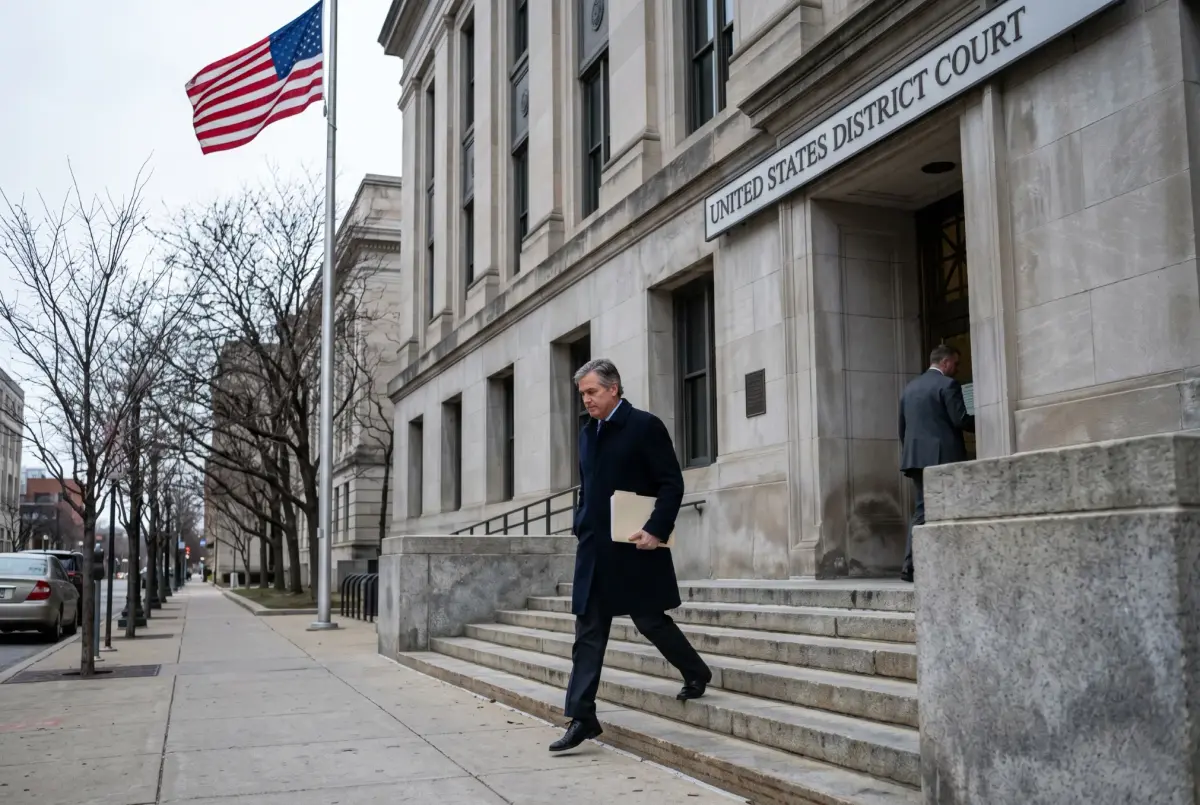
The $3.185 million Pawn America data breach settlement establishes a structured compensation framework for approximately 679,604 U.S. residents whose personal information was potentially exposed in a September 2021 cybersecurity incident. For affected customers, the settlement means three concrete things: a defined release of legal claims tied to the breach, a fixed window to file for compensation that closes July 6, 2026, and a tiered payment structure that distinguishes between symbolic recognition of harm and reimbursement of documented financial loss.
The case — captioned In re Pawn America Consumer Data Breach Litigation in the U.S. District Court for the District of Minnesota — received preliminary approval on March 6, 2026, and is set for a final approval hearing on September 9, 2026. The defendants are Pawn America Minnesota LLC, Payday America Inc., and PAL Card Minnesota LLC, three affiliated Minnesota-based consumer finance and pawn businesses. Understanding what the settlement does and does not do is essential before deciding how to act on the notice.
What the September 2021 Data Incident Actually Exposed
According to court filings, the late-September 2021 data incident at Pawn America compromised a category of information that data security researchers consider high-value: names paired with Social Security numbers, driver's license numbers, passport numbers, government identification numbers, dates of birth, and financial account information. This combination is sometimes referred to as a "full identity package" because it provides nearly everything required to open new credit accounts, file fraudulent tax returns, or impersonate the consumer in identity-verification systems.
The exposure window matters for two reasons. First, the breach affected customers of three connected entities that collected sensitive data as a routine part of their pawn-loan and short-term-credit business model — meaning the volume of data per affected person was unusually complete. Second, notification went out in October 2021, but the class action litigation took roughly four and a half years to reach preliminary settlement approval. That gap is consistent with the average timeline for U.S. data breach class actions, which industry analysis places between three and five years from breach to preliminary approval.
What "Settlement" Means in a Data Breach Class Action
A class action settlement is a court-supervised resolution that binds every member of a defined class to a release of claims in exchange for a defined set of benefits. In the Pawn America case, the class is defined as all U.S. residents in September 2021 whose private information was potentially compromised, including those who received the October 2021 breach notification. Once the court grants final approval, every class member who did not formally opt out is bound by the settlement's release — meaning they cannot sue Pawn America, Payday America, PAL Card Minnesota, or the related Released Parties for any claim arising from the September 2021 incident.
This is the foundational point that affected customers often miss. The release applies whether or not a class member files a claim. Filing the Claim Form does not extend the release; declining to file does not avoid it. The only mechanism that preserves the right to sue independently is a timely written request for exclusion postmarked by June 5, 2026.
The Three Compensation Tiers and What Each Signals
The settlement structures compensation into three tiers. Each tier reflects a different theory of harm that data breach plaintiffs typically advance, and each carries a different evidentiary burden.
| COMPENSATION TIER | AMOUNT UNDERLYING | THEORY OF HARM |
| Classwide Cash Payment | $30 | Increased risk of identity theft and time spent monitoring |
| California Cash Payment | $50 additional | Statutory damages under the California Consumer Privacy Act |
| Documented Loss Payment | Up to $5,000 | Actual out-of-pocket losses traceable to the breach |
The $30 classwide cash payment is what data breach litigators call a "common fund" benefit — a distribution available to every class member without proof of individualized harm. It compensates the legal theory that exposure to identity theft risk itself is a cognizable injury, even absent actual misuse of the stolen data. Federal courts remain divided on whether this theory supports Article III standing in litigation, but settlements increasingly recognize it as a basis for compensation.
The $50 California Cash Payment reflects a structural feature of U.S. data privacy law: California is currently the only state with a generally applicable private right of action for data breaches, codified in the California Consumer Privacy Act of 2018. Under California Civil Code Section 1798.150, California residents whose nonencrypted personal information is exposed in a breach may recover statutory damages between $100 and $750 per incident — independent of proof of actual loss. The $50 supplement reflects a negotiated allocation of those statutory damages to California class members.
The Documented Loss Payment of up to $5,000 compensates actual out-of-pocket harm. This is the tier that aligns most closely with traditional tort recovery — the plaintiff must demonstrate a concrete financial loss caused by the breach. Eligible categories include unreimbursed fraudulent charges, fees paid to address fraud, credit monitoring costs, and professional fees paid to attorneys or accountants in connection with identity theft remediation.
How the Pawn America Settlement Compares to Other Recent Data Breach Cases
Reading the Pawn America settlement in isolation can make the per-person figures look small. Reading it against comparable cases shows where it sits in the contemporary range. Three recent settlements involving similar consumer-facing defendants and similar information categories provide useful benchmarks.
| SETTLEMENT | FUND SIZE DOCUMENTED | LOSS CAP | CASH PAYMENT (NO PROOF) |
| Pawn America (2026) | $3.185 million | $5,000 | $30 (plus $50 for CA residents) |
| Fidelity Investments (2026) | $2.5 million | $5,000 | ~$100 pro rata (plus $50 for CA residents) |
| T-Mobile (2022, 2021 breach) | $350 million | $25,000 | $25 |
The pattern is consistent. The $5,000 documented-loss ceiling has become a near-standard figure in U.S. data breach settlements involving Social Security numbers, regardless of fund size. The classwide cash payment varies more — driven primarily by class size relative to the settlement fund. Pawn America's $30 figure sits at the low end of the range but is structurally similar to settlements involving comparably sized classes. The takeaway for affected customers: this is not an outlier settlement that should prompt an exclusion strategy on principle. It is a typical resolution for a data breach of this size and type.
What the Settlement Does Not Cover
Three categories of harm fall outside the settlement's compensation framework, and customers evaluating their options should understand each.
First, the settlement does not compensate emotional distress, time spent worrying about the breach, or general inconvenience. The Documented Loss Payment requires out-of-pocket financial loss with supporting evidence. Time and emotional harm, while genuinely experienced by many breach victims, are not compensable under this settlement's terms.
Second, the settlement does not provide ongoing credit monitoring as a standalone benefit. Some data breach settlements bundle multi-year credit monitoring into the class relief package; this one does not. Class members who want continuous monitoring after the breach must enroll independently — either through paid services or through the free options the Federal Trade Commission outlines on its IdentityTheft.gov data breach response page. Rebuilding credit after fraudulent accounts have been removed is a separate process; CreditSaint's guide to repairing credit after identity theft outlines the dispute steps under the Fair Credit Reporting Act.
Third, the settlement does not address breaches at other companies, even if those breaches involved the same Social Security number or driver's license number. Each settlement releases claims tied to a specific incident at a specific defendant. A class member who was affected by Pawn America in 2021 and a separate breach at another company in 2024 has independent claims in each matter.
The Procedural Path Through Final Approval
Class action settlements move through a defined judicial sequence, and understanding that sequence helps explain why payment timelines stretch many months past the claim filing deadline. The Pawn America case is currently in the notice-and-claim phase, which began with preliminary approval on March 6, 2026.
The next two checkpoints are the exclusion and objection deadline of June 5, 2026 — by which class members must opt out or file written objections — and the claim submission deadline of July 6, 2026. Class Counsel's motion for final approval must be filed by August 26, 2026, with the application for attorneys' fees and service awards filed by July 29, 2026. The Final Approval Hearing is scheduled for September 9, 2026, at 8:30 a.m. Central Time at the United States District Court, 300 South Fourth Street, Courtroom 15, Minneapolis, Minnesota.
If the court grants final approval and no appeals are filed within the applicable window, the settlement reaches its Effective Date. Court documents indicate that payments are issued approximately 90 days after the Effective Date. If appeals are filed, distribution can be delayed by additional months or, in rare cases, more than a year. For most class members in standard data breach settlements, the realistic payment window is six to twelve months after final approval.
Federal and State Frameworks Behind the Settlement
The Pawn America settlement sits at the intersection of three legal frameworks that govern how U.S. consumers can respond to data breaches. Understanding the framework matters because it explains both what the settlement provides and what gaps remain in federal data privacy law.
At the federal level, the Federal Trade Commission enforces Section 5 of the FTC Act against companies that fail to implement reasonable data security measures, treating inadequate security as an unfair or deceptive practice. The FTC does not, however, distribute compensation directly to breach victims through Section 5 enforcement actions — that role falls to private class action litigation under state law.
At the state level, every U.S. state and the District of Columbia has a data breach notification statute requiring companies to inform affected residents when their personal information is exposed. These statutes establish the notification duty but generally do not create a private right of action for damages — meaning consumers cannot sue under the statute itself for monetary recovery. The notable exception is California, where the California Consumer Privacy Act provides statutory damages of $100 to $750 per consumer per incident for breaches of unencrypted personal information, regardless of proof of actual harm.
The Pawn America settlement reflects this fragmented landscape. Federal law provides the regulatory architecture; state law provides the cause of action; and class action settlements provide the practical compensation mechanism. The $50 California Cash Payment is the visible footprint of CCPA's private right of action — and the absence of a parallel premium for residents of any other state is the visible footprint of every other state's lack of one.
What Affected Customers Should Take Away
For the roughly 679,604 people covered by the Pawn America settlement class, the settlement is best understood as a structured trade. In exchange for releasing the right to pursue individual litigation against the defendants, class members receive access to a tiered compensation system that recognizes both the abstract harm of exposure and the concrete harm of documented loss. The trade is neither generous nor unreasonable; it is consistent with how comparable data breach class actions resolve in U.S. courts.
For class members who suffered no documented loss, the practical decision is whether to file the $30 classwide claim before July 6, 2026. The release of claims applies regardless of filing, so the only question is whether to collect the available payment. For class members with documented identity theft losses tied to the September 2021 breach, the practical decision is between filing the Documented Loss Payment claim (capped at $5,000) and opting out by June 5, 2026 to pursue an individual action — a decision that turns on the magnitude of documented loss and whether it would justify the cost of independent representation. A consultation with a consumer protection attorney before the June 5 exclusion deadline is the appropriate way to make that comparison.
Frequently Asked Questions
What does the Pawn America settlement actually compensate?
The settlement compensates three categories of harm: increased risk of identity theft (the $30 classwide cash payment), CCPA statutory exposure for California residents (the $50 California Cash Payment), and actual out-of-pocket financial loss tied to the breach (up to $5,000 with supporting documentation). It does not compensate emotional distress, time spent on the issue, or general inconvenience.
Why is the per-person payment so small relative to the harm of identity exposure?
Class action settlements distribute a fixed common fund across the entire class. With approximately 679,604 class members and a $3.185 million fund (less attorneys' fees, administration costs, and service awards), the per-person classwide cash figure reflects mathematical division more than a judgment about individual harm. Class members with documented losses can recover meaningfully more through the Documented Loss Payment tier.
What happens if the court does not grant final approval?
If the court declines to grant final approval at the September 9, 2026 hearing, the settlement does not take effect, no payments are issued, and the litigation returns to active status. The parties would then either renegotiate the settlement terms, proceed to trial, or pursue alternative resolution. This outcome is uncommon but not impossible; courts occasionally reject settlements they consider inadequate or procedurally flawed.
Why does California get extra compensation?
The California Consumer Privacy Act of 2018 created a private right of action for breaches of unencrypted personal information affecting California residents, with statutory damages of $100 to $750 per consumer per incident. No other U.S. state currently has a comparably broad private right of action for data breaches. The $50 California Cash Payment reflects the negotiated value of CCPA claims that California class members are giving up in the release.
Can the settlement amount change before payments are issued?
The total fund is fixed at $3.185 million, but per-person allocations can adjust pro rata depending on the volume of valid claims filed. If documented-loss claims exceed available funding, individual amounts may be reduced. If the classwide fund has a surplus after paying validated claims, classwide payments can be increased.
Does filing a claim waive any rights I do not already lose?
No. The release of claims applies to every class member who does not formally opt out by June 5, 2026, regardless of whether they file a claim. Filing the Claim Form does not extend the release in any way. The only mechanism for preserving independent legal claims against the defendants is a timely exclusion request.
How does this settlement compare to other recent U.S. data breach settlements?
The Pawn America settlement is structurally typical: a $5,000 documented-loss cap is now the standard ceiling for breaches involving Social Security numbers, and tiered classwide payments with a CCPA supplement for California residents have become the dominant settlement model since 2022. The $30 classwide payment is at the lower end of the range but is consistent with settlements involving comparably sized classes and similarly sized funds.
What are the long-term identity theft risks from the September 2021 breach?
Social Security numbers and driver's license numbers do not expire and cannot easily be changed. That means the underlying exposure from the 2021 breach persists indefinitely — long after the settlement payment is distributed. Affected customers should consider placing free credit freezes with all three credit bureaus and monitoring their credit reports through AnnualCreditReport.com, the only federally authorized source of free reports.
Is the settlement administrator a reliable contact?
Yes. The Settlement Administrator is the entity appointed by the U.S. District Court for the District of Minnesota to manage the claims process. The official contact information — phone 1-888-266-7074, mailing address P.O. Box 301132, Los Angeles, CA 90030-1132, and the website pawnamericasettlement.com — appears in court-approved class notices. Solicitations from any other source claiming to handle Pawn America claims should be treated with caution.
What should affected customers do if they identified fraudulent activity tied to this breach?
File a Documented Loss Payment claim with supporting evidence (bank statements, police reports, FTC Identity Theft Reports), and consider reporting the identity theft at IdentityTheft.gov, the official federal identity theft reporting site. Customers with substantial losses that may exceed the $5,000 cap should consult a consumer protection attorney before the June 5, 2026 exclusion deadline to evaluate whether opting out is the better path.
Why did this settlement take more than four years to reach customers?
The Pawn America breach occurred in September 2021; preliminary settlement approval came in March 2026. Industry data indicates that U.S. data breach class actions typically take three to five years from incident to preliminary approval, driven by procedural stages including motion practice, class certification briefing, discovery, and mediation. The Pawn America timeline is in the middle of that range.
Disclaimer
This content is for general informational purposes only, is not legal advice, and does not create an attorney-client relationship. AttorneyReview works with a network of law firms across the United States. If you need help with your case, get matched free with a qualified attorney.
If you were affected by a data breach and want to evaluate your options, search for a Consumer Protection attorney on AttorneyReview.com.
You can also use our Get Matched tool to connect with a qualified attorney handling data breach and identity theft cases in your state.
Need a Consumer Protection Attorney?
Get matched with pre-screened attorneys in your area. Free to use, no obligation.
Get Matched Free