
Cruise Ship Injuries and U.S. Maritime Law: The One-Year Deadline Most Passengers Miss

Need a Personal Injury Attorney?
Get matched with pre-screened attorneys in your area. Free to use, no obligation.
Get Matched Free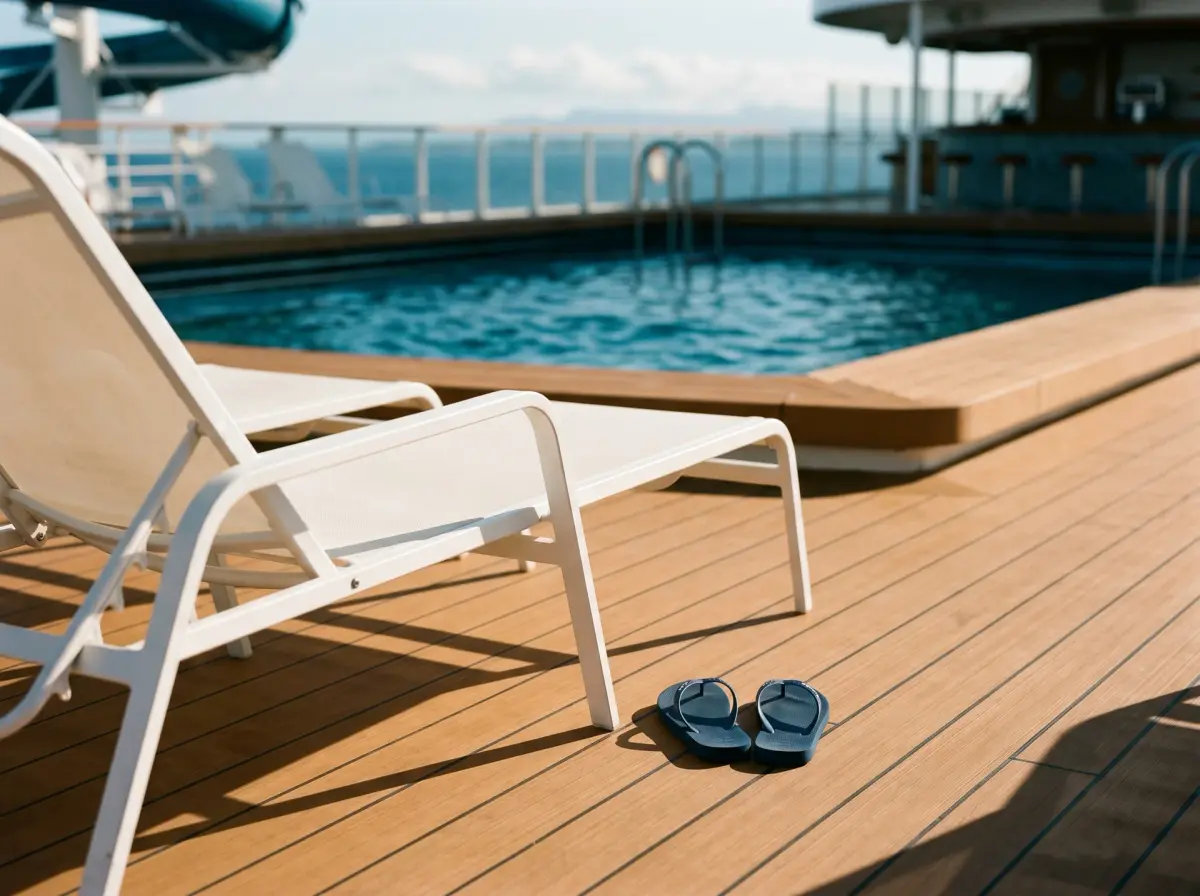
If you were burned, slipped, fell, or otherwise injured on a cruise ship, your deadline to sue may be as short as one year from the date of the accident — not the three or four years your state allows for a regular injury claim. That short window, plus a six-month written-notice requirement buried in your cruise ticket, is the single biggest reason injured passengers lose cases before they ever file.
A new $5 million lawsuit filed against Carnival Cruise Line in federal court in Miami on May 11, 2026, makes those rules concrete. A Florida passenger claims he suffered second-degree burns on both feet after walking twenty steps barefoot across the Lido Deck of the Carnival Magic. His complaint alleges Carnival received at least 42 prior complaints about overheated decks in the six years before his injury — and still failed to post warnings or change the surface.
What follows is what U.S. maritime law actually requires, what your cruise ticket is doing to your rights, and what to do if you have been hurt on a cruise.
Why Cruise Ship Injuries Follow Different Rules Than Land-Based Ones
Personal injuries on a cruise ship sailing in navigable waters are governed by federal maritime law — sometimes called admiralty law — not the personal injury law of the state where you live or where you boarded. Maritime law sets its own duty of care, its own deadlines, and its own rules about where the lawsuit can be filed.
Under the U.S. Supreme Court's decision in Kermarec v. Compagnie Generale Transatlantique, 358 U.S. 625 (1959), a vessel owner owes its passengers the duty of "reasonable care under the circumstances." That standard is higher than what a landowner owes a trespasser, but it is not strict liability — meaning the cruise line is not automatically responsible when a passenger gets hurt. To win, the passenger must usually prove the cruise line knew, or should have known, about the dangerous condition and did nothing to fix it or warn about it.
This "notice" requirement is the battleground in most cruise injury cases, and it is why the Carnival complaint spends time describing 42 prior complaints. Prior complaints are evidence the cruise line had constructive notice — knowledge it should have had — that the deck was dangerous.
The One-Year Deadline Most Passengers Don't Know About
The default statute of limitations for maritime personal injury claims is three years under 46 U.S.C. § 30106. But cruise lines do not use the default. They use a different federal statute — 46 U.S.C. § 30527 — which expressly allows the operator of a seagoing passenger vessel to shorten the deadline by contract to one year and to require written notice of the claim within six months.
Every major cruise line operating from a U.S. port uses these limits. Carnival's passenger ticket contract sets both. So do Royal Caribbean's and Norwegian's. Federal courts have repeatedly enforced these clauses, including the Eleventh Circuit in Keefe v. Bahama Cruise Line, Inc., 867 F.2d 1318 (11th Cir. 1989), where the court confirmed the contractual limits are valid as long as they are "reasonably communicated" to the passenger on the ticket.
In practical terms: a passenger injured on a Caribbean cruise on May 21, 2025 has until roughly November 21, 2025 to give written notice, and until May 21, 2026 to file suit. The Carnival Magic plaintiff filed his complaint on May 11, 2026 — ten days before the one-year cutoff. That is not unusual. That is how tight the window is.
Where You Have to Sue: The Forum-Selection Clause
Cruise tickets also contain a forum-selection clause — a provision that tells you, in advance, the only court where you are allowed to file. The U.S. Supreme Court upheld these clauses in Carnival Cruise Lines, Inc. v. Shute, 499 U.S. 585 (1991), even though the injured passenger lived in Washington State and the clause required her to sue in Florida.
For Carnival, the designated forum is the U.S. District Court for the Southern District of Florida in Miami. Royal Caribbean's contract specifies the same forum. Norwegian Cruise Line uses the same forum. This is why nearly every major cruise injury case in the United States is filed in one federal courthouse, regardless of where the passenger lives. The Carnival Magic Lido Deck case, filed as Case No. 1:26-cv-23368-KMW, was filed exactly there.
What the Cruise Line Cannot Do
Cruise lines have significant leeway to shorten your deadlines and pick the forum, but federal law sets a floor. Under 46 U.S.C. § 30527(a)(1), any provision in a cruise ticket that tries to relieve the cruise line from liability for its own negligence — or that of its employees — is void as a matter of law. The cruise line cannot bury a blanket waiver in the back of a ticket and have it enforced against an injured passenger.
The Eleventh Circuit applied this rule in Kornberg v. Carnival Cruise Lines when the cruise line tried to invoke a disclaimer in a passenger contract. The court held that the federal statute "expressly invalidates any contract provision purporting to limit a ship's liability for negligence to its passengers."
Proving a Premises Case on a Cruise Ship
For a slip-and-fall, a burn, a stair injury, or any other premises-related incident on a cruise ship, the passenger generally needs to prove four things:
- A dangerous condition existed. In the Lido Deck case, the alleged condition is a synthetic teak deck surface that reaches temperatures hot enough to cause second-degree burns in seconds when exposed to direct Caribbean sun.
- The cruise line had actual or constructive notice of the condition. Constructive notice means the condition existed long enough, or the cruise line had received enough warnings, that it should have known. The 42 prior complaints described in the Nunez complaint are textbook constructive-notice evidence.
- The cruise line failed to take reasonable steps to fix the condition or warn passengers. Reasonable steps could include posting warning signs, providing mats, installing cooler deck materials, or training crew to alert passengers on hot days.
- That failure caused the injury. Medical records documenting the type and severity of the injury, taken close in time to the incident, are critical.
If you are unsure whether your situation fits this framework, you can describe what happened and get an instant case evaluation identifying the type of attorney you need and the steps to take next.
What Damages Are Available
Damages under general maritime law for a passenger injury claim typically include past and future medical expenses, lost wages and lost earning capacity, pain and suffering, and physical disfigurement. Punitive damages are generally not available in routine passenger negligence cases under U.S. maritime law, though the area is unsettled in lower courts.
The Nunez complaint asks for more than $5 million. That figure reflects not the value of two burned feet, but the projected cost of multiple surgeries, ongoing care, lost income, and the lifetime impact of permanent disfigurement and mobility loss on a working-age plaintiff. Whether a court ultimately awards anything close to that number depends on the evidence — but $5 million is a common opening posture in serious maritime injury cases.
What to Do in the First 72 Hours After a Cruise Ship Injury
The single most important thing you can do is document and report the incident before you get off the ship. Practical steps:
- Report the incident to the ship's medical center the same day. The medical log is contemporaneous evidence that the injury happened on the ship and not afterward.
- Take photographs. Photograph the condition that caused the injury — the deck, the stair, the spill — the injury itself, and any warning signs that were, or were not, posted nearby.
- Get the names of witnesses. Other passengers leave the ship within days and become almost impossible to locate later.
- Request the incident report. The cruise line will typically write an internal incident report; you are entitled to know it exists, and your attorney can later request it in discovery.
- Keep your ticket, boarding pass, and cabin folio. The ticket is the contract that controls your case.
- Calendar the six-month and one-year deadlines immediately. Do not wait to "see how the injury heals." The clock starts the day of the incident.
Why a Maritime Attorney Specifically — Not Just Any Personal Injury Lawyer
Cruise injury claims are not regular personal injury cases. The deadlines are shorter, the forum is fixed, the duty of care comes from federal case law rather than a state pattern jury instruction, and the cruise line's defense team handles these cases every day. A general personal injury attorney who has never tried a maritime case can miss the six-month notice deadline simply by treating the case like a normal slip-and-fall — and once that deadline is gone, the case is gone with it.
If you were injured on a cruise — whether from a hot deck, a slippery floor, a stair fall, a shore excursion gone wrong, or any other cause — your first call should be to an attorney who actually handles passenger maritime cases. The Carnival Magic Lido Deck lawsuit is the model of what a properly handled cruise case looks like: filed within the one-year deadline, in the correct forum, with prior-complaint evidence already documented. The passengers who get nothing are the ones who waited until month thirteen.
Frequently Asked Questions
Can I sue a cruise line if I am injured on board?
Yes. U.S. maritime law allows passengers to sue cruise lines for negligence that causes injury, but the lawsuit must be filed within the deadline set by the passenger ticket contract — typically one year from the date of injury — and in the forum the contract designates.
What is the statute of limitations for cruise ship injuries?
The default statute of limitations under 46 U.S.C. § 30106 is three years, but cruise lines are permitted under 46 U.S.C. § 30527 to shorten that to one year by contract, and every major cruise line operating from U.S. ports does so. Most also require written notice of the claim within six months.
Where do I have to file a lawsuit against Carnival, Royal Caribbean, or Norwegian?
Carnival, Royal Caribbean, and Norwegian all designate the U.S. District Court for the Southern District of Florida in Miami as the exclusive forum for passenger injury lawsuits. The U.S. Supreme Court upheld these forum-selection clauses in Carnival Cruise Lines v. Shute, 499 U.S. 585 (1991).
What if the cruise line tries to enforce a liability waiver?
Under 46 U.S.C. § 30527(a)(1), any provision in a cruise ticket that tries to relieve the cruise line from liability for its own negligence is void as a matter of law. A cruise line cannot enforce a blanket negligence waiver against an injured passenger.
What does the cruise line usually argue to defeat a claim?
The cruise line typically argues either that it had no notice of the dangerous condition, that the passenger was responsible for the injury, or that the deadline to sue has expired. The notice defense is the most common — which is why evidence of prior complaints and incident reports matters so much.
Can I sue for an injury that happened on a shore excursion?
Possibly. If the excursion operator is truly independent, the claim may be against that operator under local foreign law. But cruise lines often exercise significant control over excursion operators, which can support a claim that the operator is the cruise line's agent and that the cruise line is vicariously liable.
Are punitive damages available in cruise injury cases?
Punitive damages are generally not available in routine passenger negligence cases under U.S. maritime law, though the area continues to evolve in lower courts. Compensatory damages — medical bills, lost income, pain and suffering, disfigurement — are the standard recovery.
What if I already missed the six-month notice deadline?
You may still have options. Courts have sometimes excused late notice when the cruise line had actual knowledge of the incident through its own incident report or medical log, or when the passenger was incapacitated. This is a fact-specific argument and should be raised with an attorney immediately.
How long do cruise injury cases take?
Cases that settle before trial typically resolve within 12 to 24 months of filing. Cases that go to trial in the Southern District of Florida can take 24 to 36 months from filing to verdict, depending on docket and discovery complexity.
Do I need to pay an attorney upfront?
Most cruise injury attorneys work on contingency, meaning they collect a percentage of the recovery only if the case wins or settles. There is no upfront cost to the passenger for the consultation or, in most cases, for filing the suit.
Disclaimer
This content is for general informational purposes only, is not legal advice, and does not create an attorney-client relationship. Readers should consult a qualified attorney licensed in their jurisdiction. AttorneyReview works with a network of law firms across the United States. If you need help with your case, get matched free with a qualified attorney.
Search for a Personal Injury attorney on AttorneyReview.com to find a maritime or cruise injury lawyer near you.
Prefer not to search on your own? Use the Get Matched feature to be connected with pre-screened attorneys based on your situation.
Not sure exactly what you need? Evaluate My Case gives you an instant, free analysis of your situation and identifies the type of attorney best suited to help.
Need a Personal Injury Attorney?
Get matched with pre-screened attorneys in your area. Free to use, no obligation.
Get Matched Free