California Bicycle Accident Attorney: Qualifications That Actually Matter

Need a Personal Injury Attorney?
Get matched with pre-screened attorneys in your area. Free to use, no obligation.
Get Matched Free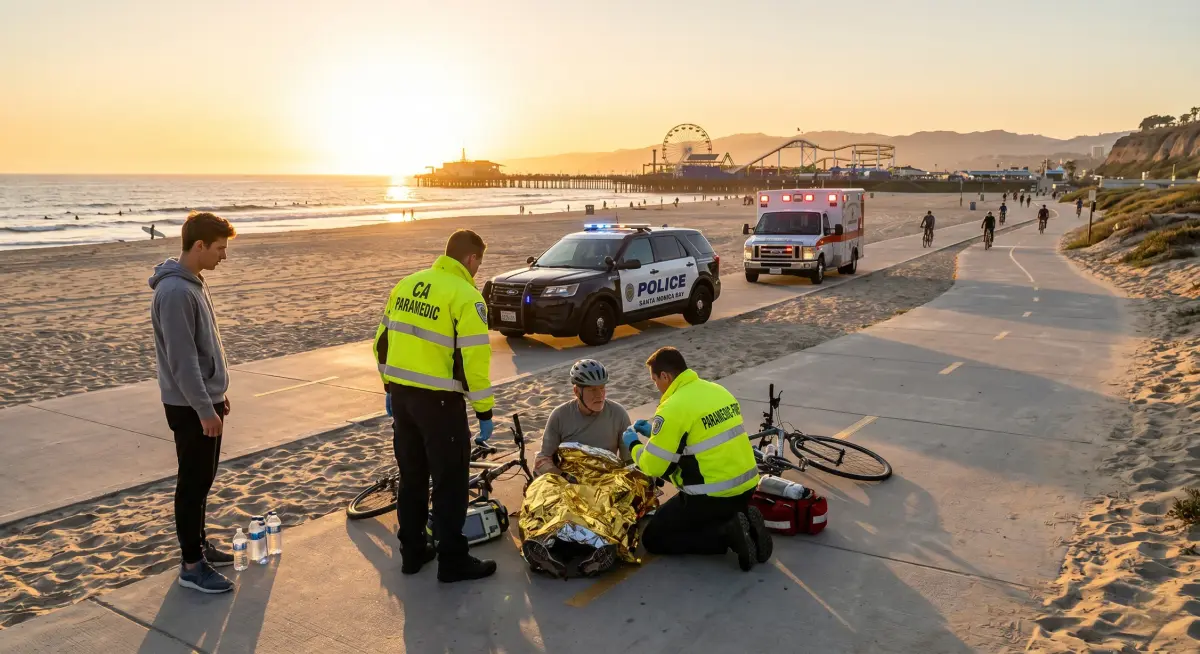
If you were injured in a bicycle accident in California caused by another party's negligence, you generally have two years from the date of injury to file a personal injury lawsuit under California Code of Civil Procedure Section 335.1 — and California's pure comparative negligence rule means you can recover damages even if you were partially at fault. Those two facts shape almost every decision you'll make from this point forward.
The next decision is who to hire. As Joy Coleman, Esq., a legal content contributor at AttorneyReview.com, I want to walk you through the qualifications that actually matter when choosing a California bicycle accident attorney — beyond billboard slogans — and the specific California statutes and procedural rules your attorney will need to handle correctly.
What You Are Facing: A Quick Overview
The first 30 days after a bicycle accident are usually the most consequential. You are dealing with physical recovery, medical bills, missed work, and a damaged bicycle. At the same time, the at-fault driver's insurance adjuster is calling — often within 48 hours — to take a recorded statement and to "see if we can resolve this quickly." Quick resolution is rarely in your interest.
According to the California Office of Traffic Safety, 145 bicyclists were killed in California traffic crashes in 2023, and thousands more suffered serious injuries. Cyclists are vulnerable road users, and the injuries — head trauma, fractures, road rash, spinal injuries — tend to be severe relative to the speed of the impact. The legal task in front of you is to document what happened, protect your right to compensation, and avoid the early mistakes that adjusters rely on to reduce or deny claims.
Personal Injury Laws in California: What You Need to Know
Three California rules drive almost every bicycle accident claim.
First, the negligence standard. California Civil Code Section 1714 provides that "everyone is responsible, not only for the result of his or her willful acts, but also for an injury occasioned to another by his or her want of ordinary care or skill." If a driver failed to exercise ordinary care — running a red light, opening a door into a bike lane, failing to yield while turning — and that failure caused your injury, the driver is liable.
Second, pure comparative negligence. California is one of 13 states that follows the pure comparative negligence rule, established by the California Supreme Court in Li v. Yellow Cab Co., 13 Cal.3d 804 (1975). Your damages are reduced by your percentage of fault — but never barred. If a jury finds your damages are $200,000 and assigns you 30% of the fault, you recover $140,000. Even a cyclist found 90% at fault can technically recover 10%. This is more plaintiff-friendly than the modified comparative negligence rule used in most other states, which bars recovery once the plaintiff hits 50% or 51% fault.
Third, the statute of limitations. Under California Code of Civil Procedure Section 335.1, you have two years from the date of the accident to file a personal injury lawsuit. Important exception: if your claim is against a government entity — for example, a city vehicle struck you, or a poorly maintained roadway contributed to the crash — you must file an administrative claim within six months under California Government Code Section 911.2. Missing either deadline ends the case before it starts.
One more point worth knowing. California's helmet law (Vehicle Code Section 21212) only requires riders under 18 to wear helmets. There is no helmet requirement for adult cyclists. Insurance adjusters still raise non-use of a helmet as a comparative negligence argument, but the absence of a legal requirement weakens that argument considerably.
How the Process Works in California
A typical California bicycle accident claim moves through these stages. Most cases settle before trial, but every case is built as if it might go.
- Initial consultation and case investigation. Your attorney reviews the police report, photographs of the scene and injuries, witness statements, medical records, and any video footage (traffic cameras, doorbell cameras, dashcams, or witness phones). Time-sensitive evidence — like surveillance footage that may be overwritten in 7 to 30 days — is preserved early.
- Medical treatment and damages documentation. Your attorney waits for you to reach maximum medical improvement before quantifying damages. Settling earlier often means leaving future medical costs on the table.
- Demand letter to the driver's insurer. Once damages are documented, your attorney sends a written demand outlining liability, injuries, treatment, and the amount sought.
- Insurance negotiation. The adjuster typically responds with a counteroffer well below the demand. Multiple rounds of negotiation are normal.
- Filing the lawsuit. If negotiation stalls, your attorney files a complaint in the California Superior Court for the county where the accident occurred. This protects the statute of limitations and signals seriousness.
- Discovery. Both sides exchange written discovery (interrogatories, document requests, requests for admission) and take depositions of you, the driver, witnesses, and treating physicians.
- Mediation. Most California courts require or strongly encourage mediation before trial. A neutral mediator helps both sides find a settlement number.
- Trial. If mediation fails, the case is tried before a judge or jury. Bicycle cases often turn on accident reconstruction testimony and the credibility of the cyclist versus the driver.
What It Typically Costs in California
Almost all California bicycle accident attorneys take cases on contingency — you pay no attorney fees upfront, and the attorney is paid a percentage of the recovery. If there is no recovery, you owe no attorney fees.
The contingency percentage typically scales with how far the case goes. Pre-litigation settlements are usually billed at 33.33%, while cases that proceed to a filed lawsuit step up to 40%. Some firms add a step-up if the case goes to trial. The exact terms must be in your written contingency fee agreement, which California Business and Professions Code Section 6147 requires for any contingency arrangement.
Separate from attorney fees are case costs — filing fees, deposition transcripts, accident reconstruction experts, medical record retrieval, and court reporter fees. Most firms advance these costs and recover them out of the settlement. Always confirm in writing whether you owe advanced costs if the case is unsuccessful — policies vary by firm.
| Fee Type | How It Works | Typical for California Bicycle Cases? |
| Contingency fee | Percentage of recovery (often 33.33% pre-suit, 40% after filing) | Standard for plaintiffs |
| Hourly | Set hourly rate billed against time worked | Rare on the plaintiff side; common in defense |
| Retainer | Upfront deposit billed against hourly work | Not used in plaintiff bicycle accident cases |
What to Look for in a Personal Injury Attorney
Bicycle accident cases are not just car accidents on two wheels. The fault dynamics, the injury patterns, and the insurance defenses are different. The qualifications that matter most are concrete.
- Specific experience with bicycle cases. Ask how many bicycle accident cases the attorney has handled in California in the last five years, and the outcomes. A general personal injury attorney without cycling-specific experience will miss arguments that defense counsel will exploit — especially around comparative fault and Vehicle Code provisions like CVC § 21200 (cyclists' rights), § 21202 (right-side riding), and § 22517 (dooring).
- Track record in California courts. Settlement-only firms can struggle to maximize value because insurance carriers know they will not try the case. Ask how many cases the attorney has tried to verdict in California Superior Court.
- Capacity to advance case costs. A serious bicycle case may require a $5,000 to $25,000 accident reconstruction expert, plus medical experts. Confirm the firm can carry those costs through trial.
- Bar standing. Verify the attorney's status with the State Bar of California, including any record of discipline.
- Communication. Ask who will handle the day-to-day file work, how often you will be updated, and how the firm responds to questions between updates.
In your consultation, ask: "How do you handle a comparative negligence defense — specifically a helmet non-use argument?" "Have you taken a California bicycle case to verdict, and what was the outcome?" "Who at the firm will be my primary contact?"
Common Mistakes People Make
- Giving a recorded statement to the driver's insurer. You are not required to. Adjusters use recorded statements to lock in early descriptions that can be exploited later — especially descriptions of speed, lane position, and signaling.
- Delaying medical treatment. Gaps in treatment are the single most common defense argument used to minimize injury severity. See a doctor immediately, follow the treatment plan, and document everything.
- Failing to preserve evidence. Photograph the scene, the bicycle, the vehicle, your injuries, and any visible road conditions. Get contact information for witnesses on the spot. Doorbell, traffic, and business surveillance footage is often deleted within 7 to 30 days — your attorney needs to send preservation letters fast.
- Posting on social media. Insurance defense routinely monitors plaintiffs' social accounts. A photo of you smiling at a friend's birthday becomes "evidence" you weren't really injured. Lock down your accounts and avoid posting anything about the accident, your recovery, or your activities.
Frequently Asked Questions
How do I find a good personal injury attorney near me for a bicycle case?
Start with attorneys whose practice includes a substantial number of bicycle cases — not just general car accident work. Verify their standing with the State Bar of California and review verdict and settlement history. Most California bicycle attorneys offer free initial consultations on contingency, so meet with two or three before deciding.
What should I bring to my first meeting with a bicycle accident attorney?
Bring the police report (or its number), photographs of the scene, your bicycle, and your injuries, contact information for witnesses, all medical records and bills to date, your health and auto insurance policies, and any correspondence you have received from the at-fault driver's insurer. A written timeline of the accident and your recovery will save time.
Can I still file a claim if I was partially at fault for the bicycle accident?
Yes. Under California's pure comparative negligence rule, you can recover damages even if you were partially at fault — your compensation is simply reduced by your percentage of fault. Even a cyclist found 80% at fault can recover 20% of the damages.
Do I have to wear a helmet to recover damages in a California bicycle accident?
No. California Vehicle Code Section 21212 only requires helmets for riders under 18. Adult cyclists are not legally required to wear helmets. Insurance adjusters may still argue helmet non-use as comparative negligence, but the absence of a legal duty significantly weakens that argument.
How long does a bicycle accident claim take in California?
Straightforward cases with clear liability and modest injuries can resolve in 4 to 9 months. Cases involving disputed fault, serious injuries, or litigation typically take 1 to 2 years, sometimes longer if the case goes to trial.
What if a city vehicle or poorly maintained road caused the accident?
Claims against a public entity in California require an administrative claim filed within six months of the accident under Government Code Section 911.2. This is much shorter than the standard two-year deadline and is the most commonly missed deadline in cases involving government defendants.
How much is my California bicycle accident claim worth?
Value depends on documented medical expenses, future medical needs, lost income, and non-economic damages like pain and suffering — reduced by any comparative fault assigned to you. There is no formula or "average." Anyone who quotes a number before reviewing your medical records and the liability evidence is guessing.
What if the driver who hit me was uninsured?
If you have an auto insurance policy with uninsured/underinsured motorist (UM/UIM) coverage, that coverage typically applies even when you were on a bicycle, under California Insurance Code Section 11580.2. Notify your own insurer promptly — most policies require timely notice.
If you were injured in a California bicycle accident, the practical next step is straightforward: get a medical evaluation today (even if you feel fine), photograph everything you can, do not give a recorded statement to the at-fault driver's insurer, and consult with a California bicycle accident attorney within the first few weeks. The CCP 335.1 two-year clock is generous compared to the six-month government claim deadline — but evidence disappears in days, not years.
Disclaimer
This article is for general informational purposes only, does not constitute legal advice, and does not create an attorney-client relationship. California laws change frequently. Always consult a licensed California personal injury attorney about your specific circumstances before taking any action. AttorneyReview works with a network of law firms across the United States. If you need help with your case, get matched free with a qualified attorney.
Find a Personal Injury attorney for your case. Or let us help you — Get Matched with a qualified attorney based on the details of your case.
Need a Personal Injury Attorney?
Get matched with pre-screened attorneys in your area. Free to use, no obligation.
Get Matched Free