Is a Spousal Support Attorney Worth It in California?

Need a Family Law Attorney?
Get matched with pre-screened attorneys in your area. Free to use, no obligation.
Get Matched Free
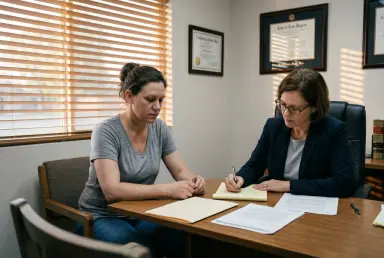
Hiring a spousal support attorney in California is usually worth it when meaningful money or a long-term marriage is on the table. Spousal support in California is governed by California Family Code Section 4320, a discretionary statute with no fixed formula for long-term support — which means the amount and duration often turn on how well your case is presented, not just on the underlying facts. An attorney's job is to build that presentation, push back on inflated income or expense claims, and make sure the support order tracks the law instead of the other side's pressure.
That said, hiring counsel is not automatic for every case. A short, low-conflict marriage with similar incomes, no children, and full agreement on the numbers may not need a full retainer — limited-scope representation or mediation can be enough. The decision usually comes down to four variables: marriage length, income disparity, whether children are involved, and how cooperative the other spouse is. The rest of this article walks through how California's spousal support framework actually works, what attorneys cost, and how to decide whether to retain one for your situation.
What spousal support means in California
Spousal support — also called alimony or, between registered domestic partners, partner support — is a court-ordered monthly payment from one spouse to the other during or after a divorce, legal separation, or domestic violence case. California recognizes two distinct types: temporary support, which keeps household finances stable while the case is pending, and long-term (sometimes called "permanent") support, which is ordered as part of the final judgment.
The two types are calculated very differently. Temporary support is typically set using a county-by-county guideline calculator that runs the parties' incomes through software like DissoMaster or X-Spouse — fast, formulaic, and aimed at preserving the financial status quo. Long-term support is not formulaic. The judge has to weigh the statutory factors in Family Code Section 4320 and explain how each one applies. That difference matters: temporary support hearings are short and numbers-driven, while long-term support trials are evidence-heavy and discretion-driven.
What the law actually says: Family Code Section 4320
Section 4320 sets out 14 factors a California court must consider before ordering long-term spousal support. The statute requires the judge to weigh, among other things: the earning capacity of each party (including marketable skills and the time and expense to develop them), the supported spouse's contribution to the supporting spouse's education or career, the supporting spouse's ability to pay, the marital standard of living, the duration of the marriage, the age and health of each party, any documented history of domestic violence, immediate and specific tax consequences, and "any other factors the court determines are just and equitable."
The breadth of that statute is the reason outcomes vary so much. Two California marriages with identical incomes can produce very different support orders depending on how the 4320 factors get presented. The 10-year mark also carries weight: under Family Code Section 4336, a marriage of 10 years or more is presumed to be a long-term marriage, and the court retains jurisdiction over support indefinitely unless the parties agree otherwise. For shorter marriages, courts often use the rough guideline that support lasts about half the length of the marriage — a presumption, not a rule, and one a competent attorney can argue around when the facts justify it.
Why an attorney makes a difference
Because long-term support is discretionary, the lawyer's role is less about citing law and more about controlling the record the judge sees. That includes the income and expense declarations (form FL-150), the 4320 factor attachment (form FL-349), vocational evaluations when earning capacity is contested, and the financial discovery used to expose hidden income or undervalued business interests. In California, full financial disclosure is mandatory under Family Code Section 2100 and following — and the penalties for hiding assets can include sanctions, attorney fee awards, and in some cases the entire concealed asset awarded to the other spouse.
An attorney is most clearly worth the cost in five situations: marriages of 10 years or longer, significant income disparity, self-employment or business ownership on either side, alleged domestic violence, and contested parenting that affects the supported spouse's ability to work. In any of these, the difference between a well-prepared 4320 presentation and a default outcome can be hundreds of thousands of dollars over the life of a support order.
The actual process — temporary order to final judgment
The path from filing to a final spousal support order has predictable stages, even when the case feels chaotic. The first move is filing the Petition for Dissolution of Marriage, which lets either spouse request temporary support immediately. Temporary orders are usually decided within 30 to 90 days at a Request for Order hearing in the local superior court — for example, the Los Angeles, San Diego, or San Francisco Superior Court — based on each side's income and expense declaration.
After temporary orders, both spouses exchange Preliminary Declarations of Disclosure (form FL-140), then move into discovery — formal requests for production, interrogatories, depositions of the other spouse, and sometimes subpoenas to employers or banks. Most cases settle during this phase through direct negotiation between attorneys, mediation, or a Mandatory Settlement Conference. If no agreement is reached, the case proceeds to trial, where a judge applies the 4320 factors and issues a final order, which is then incorporated into the Judgment of Dissolution.
Total timeline: California has a mandatory six-month waiting period from service of the petition before any divorce can be finalized, but contested cases routinely run 12 to 24 months, and high-conflict or high-asset cases can take longer. The Judicial Council of California's 2025 Court Statistics Report recorded 108,403 dissolution, legal separation, and annulment filings in 2024 — a 20-year low, but still one of the highest family law caseloads in the country.
What it costs to hire a California spousal support attorney
Most California family law attorneys bill hourly. Rates typically run $300 to $600 per hour for general family law counsel, $500 to $850 per hour for a Certified Family Law Specialist (CFLS) — a designation held by fewer than 5% of California family law attorneys, certified by the State Bar's Board of Legal Specialization — and higher in major metro areas like Los Angeles and the Bay Area. Initial retainers usually range from $5,000 to $15,000 for standard cases and $20,000 or more for high-asset or high-conflict matters.
The retainer is not the total cost. It is a deposit the attorney bills against, replenished as the case continues. Below is what those rate ranges typically translate to over the life of a case.
| CASE TYPE | TYPICAL RETAINER | TOTAL FEE RANGE |
| Uncontested, short marriage | $2,500–$5,000 | $3,500–$8,000 |
| Contested temporary support | $5,000–$10,000 | $10,000–$25,000 |
| Long-term marriage, contested 4320 factors | $10,000–$20,000 | $25,000–$75,000+ |
| High-asset or self-employed payor | $20,000+ | $50,000–$200,000+ |
Two cost-control options are worth knowing. Limited-scope representation — sometimes called unbundled services — lets you hire an attorney for specific tasks (drafting an FL-349, appearing at one hearing, reviewing a stipulation) rather than the full case, often at a flat fee. Family Code Section 2030 also allows the lower-earning spouse to request need-based attorney fees from the other side, leveling the legal-spending playing field when there is significant income disparity.
What to look for in a California family law attorney
Choosing an attorney for a California spousal support matter comes down to four checks. First, confirm California licensure through the State Bar of California's Certified Legal Specialist directory. CFLS designation is not required for every case, but it signals advanced training in family law specifically. Second, ask how often the attorney appears in your county's family court — local procedure varies meaningfully between Los Angeles, Orange County, and Bay Area courts. Third, look for financial fluency. Spousal support cases turn on income, business valuation, and tax treatment; an attorney who cannot read a tax return or a balance sheet will lean on outside experts more than necessary. Fourth, in your consultation, ask directly: "How do you typically resolve cases like mine — settlement, mediation, or trial?" The answer should match your goals.
Cost transparency is the other signal. A California family law attorney should be able to give you a hourly rate, a retainer estimate, a billing-frequency schedule, and a realistic range of total fees for cases similar to yours. Vague answers on fees usually predict vague billing later.
Three mistakes that cost spouses real money
Some patterns repeat across spousal support cases and reliably hurt the spouse who falls into them.
- Incomplete or misleading financial disclosure. California requires full disclosure under Family Code Section 2100 and following, and the penalties for hiding assets include sanctions and, in some cases, the entire concealed asset awarded to the other spouse — see Marriage of Rossi (2001) for the controlling case.
- Relying on verbal or informal agreements instead of a stipulated court order. An out-of-court understanding about support is unenforceable. If your ex stops paying, you have nothing the court can enforce until the agreement is filed and signed by a judge.
- Waiting too long to request temporary support. Temporary support generally runs from the date you file the request, not from the date of separation. Every month of delay is a month of support you cannot recover.
A separate financial issue worth flagging: divorce often damages the supported spouse's credit, particularly when joint accounts go unpaid during litigation. Couples handling joint debt during or after divorce can benefit from coordinated planning — Credit Saint's guide to credit repair for couples walks through how to separate financial identities and address inaccurate items on a credit report. For couples carrying significant unsecured debt heading into a divorce, BestGuide's Credit Associates review outlines what structured debt settlement actually looks like in practice.
Deciding whether to hire a spousal support attorney
The decision usually clarifies once you map your case to four factors: length of marriage, income disparity, complexity of assets, and level of conflict. If your marriage is under five years, incomes are similar, assets are simple, and you and your spouse can talk about money without a fight, mediation or limited-scope representation is often enough. If any one of those four flips — a 10-year-plus marriage, a 3:1 income gap, a business or significant retirement assets, or a spouse who is hiding income or refusing to disclose — full representation is the answer. Spousal support orders compound: a $3,000 monthly difference over 15 years is $540,000. The legal fees that change that outcome rarely come close to that number.
Frequently asked questions
How is long-term spousal support calculated in California?
There is no formula. The judge weighs the 14 factors in Family Code Section 4320 — including earning capacity, marital standard of living, duration of marriage, age and health, and any documented domestic violence — and issues a discretionary order. Temporary support, by contrast, is calculated using county guideline software based on each spouse's income.
How long does spousal support last in California?
For marriages under 10 years, courts commonly use the presumption that support lasts about half the length of the marriage. For marriages of 10 years or more, the court retains jurisdiction indefinitely under Family Code Section 4336(b), though the order can still be modified or terminated based on changed circumstances or the supported spouse becoming self-supporting.
Can spousal support orders be modified after the divorce is final?
Yes. Either party can file a Request for Order to modify or terminate support if there has been a material change in circumstances — job loss, retirement, a substantial raise, remarriage of the supported spouse, or cohabitation. Under Family Code Section 4323, cohabitation creates a rebuttable presumption of decreased need.
What is the difference between temporary and long-term spousal support?
Temporary support is ordered while the divorce is pending and is calculated using county guideline software focused on maintaining the financial status quo. Long-term support is ordered as part of the final judgment, calculated through the discretionary 4320 factors, and is generally lower than temporary support because the supported spouse is expected to move toward self-support.
Does California have a fault-based bar to spousal support?
California is a no-fault state, so general marital misconduct does not affect support. There is one major exception: under Family Code Section 4325, a documented history of domestic violence by the spouse seeking support against the spouse paying creates a rebuttable presumption against any award of spousal support to the abusive spouse.
Can a prenuptial agreement waive spousal support in California?
Sometimes. Under Family Code Section 1612, a premarital waiver of spousal support is enforceable only if the party against whom enforcement is sought was represented by independent counsel at signing and the waiver is not unconscionable at the time of enforcement. Without independent counsel, the waiver is generally unenforceable.
How does spousal support interact with child support?
Child support is calculated first, using California's mandatory guideline formula, before spousal support. The amount paid in spousal support reduces the payor's net disposable income for child support calculation purposes — which is why settling them in the wrong order, or treating them separately, can produce a result that does not actually match what the guideline software produces.
Are spousal support payments taxable in California?
For divorces finalized after December 31, 2018, spousal support is no longer deductible by the payor or taxable to the recipient under federal law (Tax Cuts and Jobs Act). California state tax treatment is different: spousal support remains deductible by the payor and taxable to the recipient on California returns. This split treatment makes tax planning during settlement negotiation a meaningful issue.
How do I find a qualified California family law attorney?
Start with the State Bar of California's Certified Legal Specialist directory and your county bar association's Lawyer Referral Service. Confirm active California licensure, ask about CFLS designation, and request specific experience with cases like yours — long-term marriage, self-employed payor, or high-asset, depending on your situation.
Disclaimer
This content is for general informational purposes only, is not legal advice, and does not create an attorney-client relationship. Readers should consult a qualified attorney licensed in their jurisdiction. AttorneyReview works with a network of law firms across the United States. If you need help with your case, get matched free with a qualified attorney.
Search for a Family Law attorney in California on AttorneyReview.com to find counsel for your spousal support matter. Get Matched with a qualified California family law attorney based on your specific situation and case priorities.
Need a Family Law Attorney?
Get matched with pre-screened attorneys in your area. Free to use, no obligation.
Get Matched Free