Motorcycle Accident Attorney in California? Here's What to Know

Need a Personal Injury Attorney?
Get matched with pre-screened attorneys in your area. Free to use, no obligation.
Get Matched Free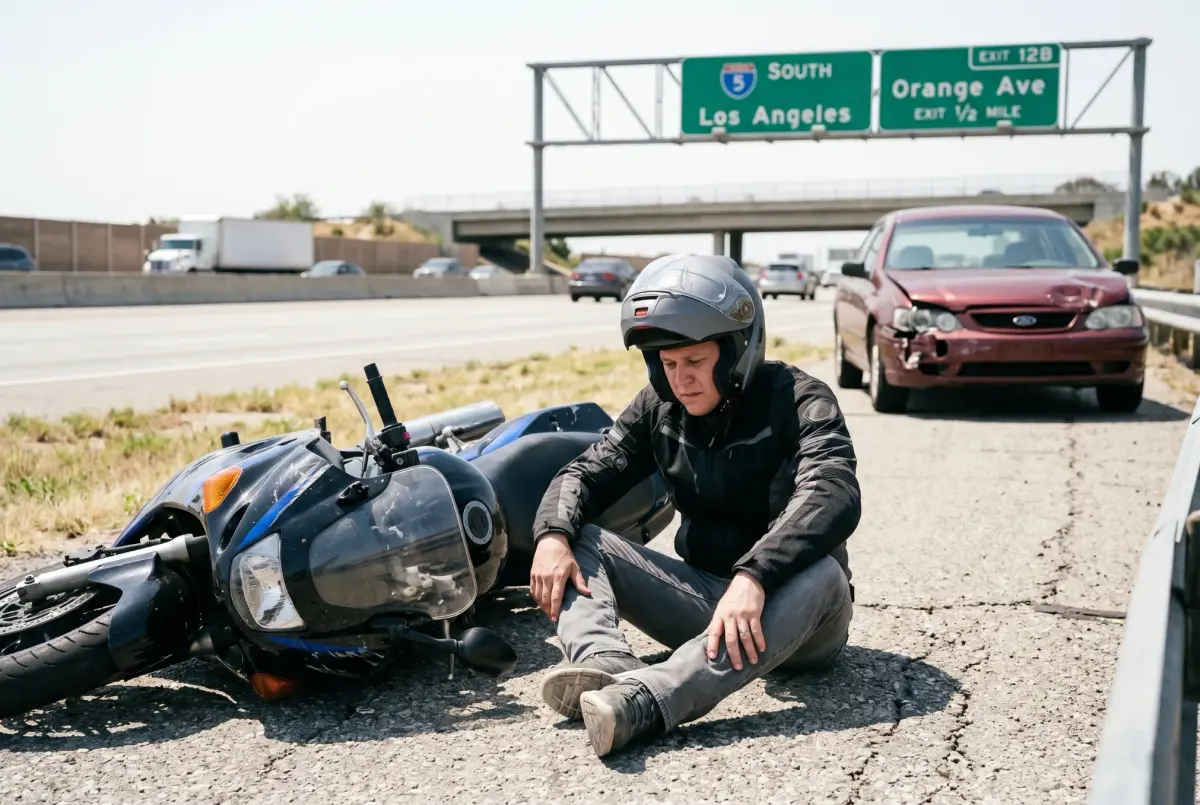
A motorcycle accident attorney in California — a licensed personal injury lawyer who handles claims arising from motorcycle crashes — is often the difference between recovering your full damages and settling for a fraction of what your case is worth. If you've been hurt in a California motorcycle accident, insurance companies are already working against you. Here is what you need to know before you talk to an adjuster.
Motorcyclists are among the most vulnerable road users in the state. According to data from the California Highway Patrol's Statewide Integrated Traffic Records System (SWITRS), there were more than 13,000 motorcycle-related injury collisions in California in 2021 alone — and fatalities consistently account for a disproportionate share of all traffic deaths relative to motorcycle registrations. The injuries are almost always severe: traumatic brain injuries, spinal cord damage, road rash requiring skin grafts, and broken bones that require months or years of recovery. The financial and legal stakes are high, and the steps you take in the days after a crash directly shape the outcome of your claim.
California Personal Injury Laws That Govern Motorcycle Claims
Two legal principles will define nearly every decision in your California motorcycle accident case.
The first is negligence. Under California Civil Code § 1714, everyone is responsible for an injury caused to another by their want of ordinary care or skill. In a motorcycle accident context, this means a driver who failed to check mirrors before changing lanes, ran a red light, or turned left across a motorcyclist's path can be held liable for the resulting damages. To prevail on a negligence claim, you must establish four elements: the at-fault party owed you a duty of care, they breached that duty, the breach caused your accident, and you suffered actual damages as a result.
The second is California's pure comparative negligence rule. Unlike states that bar recovery if you share fault above a certain threshold, California allows you to recover even if you were partially at fault — but your compensation is reduced by your percentage of responsibility. If a jury awards $200,000 and finds you 25 percent at fault, you recover $150,000. Insurance companies know this rule well, and they will attempt to inflate your assigned fault percentage in every negotiation. Lane splitting — which is legal in California under Vehicle Code § 21658.1 when done safely — is a common target. An experienced motorcycle accident attorney builds the evidentiary record that keeps your fault percentage as low as the facts allow.
The statute of limitations for personal injury claims in California is two years from the date of injury under Code of Civil Procedure § 335.1. Missing that deadline eliminates your right to pursue compensation through the courts regardless of how strong your case is. Claims involving government entities — such as a crash caused by a dangerous road condition maintained by a public agency — require a Government Tort Claim filed within six months of the incident under Government Code § 911.2. That shorter deadline catches many injured riders off guard.
Who Can Be Held Liable for a California Motorcycle Accident
Liability in motorcycle accident cases is not always limited to the driver who hit you. Your attorney will investigate each of the following potential defendants.
Negligent drivers are the most common cause of motorcycle crashes, particularly in left-turn collisions where a vehicle turns directly into an oncoming rider's path. Distracted driving, failure to yield, and following too closely are among the most frequently cited bases for liability. Road agencies and government entities can be liable when a dangerous road condition — a pothole, oil slick, uneven pavement, or debris — causes or contributes to a crash, though the six-month Government Tort Claim deadline applies. Motorcycle or parts manufacturers face strict product liability claims when a defective throttle, brake system, tire, or helmet contributed to the accident. Strict liability means the plaintiff does not need to prove the manufacturer was careless — only that the product had a dangerous defect. Understanding which defendants apply to your case, and in what proportions, is one of the core functions of a skilled motorcycle accident attorney.
How a California Motorcycle Accident Claim Works
After a free initial consultation, your attorney begins a thorough investigation — gathering accident reports, witness statements, photographs, video surveillance, medical records, and expert opinions as needed. Evidence on California roads disappears fast. Skid marks fade. Witnesses move on. An attorney can issue preservation letters and retain accident reconstruction experts to lock down the factual record before it erodes.
While you continue medical treatment, your attorney handles all communications with insurance carriers — protecting you from adjusters trained to obtain recorded statements that minimize your claim or shift blame. Once your treatment is complete or you have reached maximum medical improvement, your attorney compiles a comprehensive demand letter and begins negotiation. If a fair settlement cannot be reached, your attorney files a lawsuit in California Superior Court, initiating the formal discovery process and, if necessary, proceeding to trial.
Most California motorcycle accident cases resolve before trial, but having an attorney who is genuinely prepared to litigate changes how insurance companies respond at every stage. For a detailed breakdown of how attorney fees work in California personal injury cases, see this overview of how personal injury lawyer costs are calculated in California.
Damages You Can Recover
A successful California motorcycle accident claim can pursue both economic and non-economic damages. Economic damages include past and future medical expenses, lost wages, loss of future earning capacity, and property damage to your motorcycle. Non-economic damages include pain and suffering, emotional distress, scarring and disfigurement, and loss of consortium for your spouse. In cases involving a fatality, surviving family members can pursue wrongful death and survival action claims simultaneously against all liable parties.
California does not cap non-economic damages in motorcycle accident cases — unlike medical malpractice, where caps apply. This means that in cases of catastrophic injury, the full scope of a rider's suffering and long-term impairment can be placed before a jury. Calculating this full picture accurately, including future medical needs and projected lost earning capacity, requires the kind of expert support that an experienced motorcycle accident attorney brings to the case.
What to Do After a California Motorcycle Accident
Call 911, seek medical attention even if injuries feel minor — some spinal and brain injuries are not fully symptomatic at first — and report the accident to law enforcement to generate an official report. Photograph the scene, the vehicles involved, road conditions, and your injuries before anything is altered. Collect the names and contact information of any witnesses. Do not give a recorded statement to any insurance adjuster, your own or the other driver's, before consulting a motorcycle accident attorney. What you say in those first conversations can be used to reduce your recovery.
If a government agency may be responsible for a road defect that contributed to the crash, note the location and condition precisely and contact an attorney immediately — the six-month filing deadline under Government Code § 911.2 begins on the date of the incident and cannot be extended.
What to Look for in a California Motorcycle Accident Attorney
Look for an attorney with specific, demonstrated experience handling motorcycle accident claims in California — not just general personal injury work. The combination of pure comparative negligence, lane splitting disputes, rider bias among some juries, and the complexity of multi-defendant cases involving government entities and product manufacturers makes this a distinct practice area. Ask about their record in motorcycle-specific cases, how they approach fault investigations, and whether they work with accident reconstruction experts as a standard part of case preparation.
Motorcycle accident attorneys in California typically work on a contingency fee basis — you pay no upfront fees, and the attorney's payment is a percentage of what they recover. If they don't recover, you owe nothing. Most California personal injury contingency fees range from 33% to 40% depending on whether the case settles before or after a lawsuit is filed. Before you give any recorded statements, sign any paperwork, or make any decisions about your medical treatment in isolation, consult a California motorcycle accident attorney. The consultation is free, and the decisions made in the first days after a crash are often the ones that matter most.
Frequently Asked Questions
Do I need a motorcycle accident attorney in California?
If you suffered injuries, you should consult an attorney before taking any other steps. California's pure comparative negligence system means insurance companies will work to inflate your share of fault — reducing your recovery dollar for dollar. An experienced motorcycle accident attorney builds the evidentiary record that protects your percentage and maximizes what you recover.
What is pure comparative negligence in California motorcycle cases?
California's pure comparative negligence rule, rooted in Civil Code § 1714, allows you to recover damages even if you were partially at fault for the crash. Your compensation is reduced by your percentage of responsibility. There is no fault threshold that bars recovery entirely, unlike modified comparative negligence states. This makes how fault is framed in negotiations and at trial one of the most consequential issues in your case.
Is lane splitting legal in California?
Yes. Lane splitting — riding between rows of stopped or slow-moving vehicles — is legal in California under Vehicle Code § 21658.1 when performed safely. The California Highway Patrol has published guidelines defining what constitutes safe lane splitting. Insurance companies frequently argue that lane-splitting riders share fault for accidents, even when the other driver failed to check mirrors or changed lanes carelessly. Your attorney must demonstrate your compliance with CHP guidelines and the other driver's independent negligence.
How long do I have to file a motorcycle accident lawsuit in California?
The general statute of limitations for personal injury claims is two years from the date of injury under Code of Civil Procedure § 335.1. If a government entity is responsible — for example, a public agency that failed to repair a dangerous road condition — a Government Tort Claim must be filed within six months of the incident under Government Code § 911.2. Missing either deadline eliminates your right to sue.
What damages can I recover after a California motorcycle accident?
You can recover economic damages including past and future medical expenses, lost wages, loss of future earning capacity, and motorcycle property damage. You can also recover non-economic damages including pain and suffering, emotional distress, and scarring or disfigurement. California does not cap non-economic damages in motorcycle accident cases. In fatal crashes, surviving family members can bring wrongful death and survival action claims simultaneously against all liable parties.
Can I recover if I was not wearing a helmet during a California motorcycle accident?
California Vehicle Code § 27803 requires all motorcycle riders and passengers to wear a DOT-approved helmet. Riding without a helmet does not bar your recovery, but it gives the defense a comparative fault argument on any head or brain injuries you sustained. Your attorney must be prepared to counter that argument, which makes documenting your helmet use — or preserving evidence of what you were wearing at the time of the crash — important from the first day.
What if a defective motorcycle part caused or contributed to my accident?
You may have a product liability claim against the manufacturer, distributor, or retailer of the defective component. Under California strict products liability law, you do not need to prove the manufacturer was careless — only that the product had a dangerous defect that caused your injury. These claims often require forensic analysis of the motorcycle itself and should be initiated before any repairs are made or the bike is moved from its post-crash condition.
What should I not say to the insurance company after a motorcycle accident?
Do not give any recorded statement to any insurance adjuster — yours or the other driver's — before consulting a motorcycle accident attorney. Adjusters are trained to ask questions in ways that elicit admissions about your speed, your lane position, or your reaction time. Even accurate, good-faith answers can be used to increase your comparative fault percentage and reduce your recovery.
How much does a California motorcycle accident attorney cost?
Most California motorcycle accident attorneys work on a contingency fee basis — you pay no upfront fees, and the attorney receives a percentage of the amount recovered, typically 33% to 40% depending on whether the case settles or goes to trial. If they do not recover compensation for you, you owe nothing. This structure makes qualified legal representation accessible regardless of your financial situation at the time of the crash.
What evidence is most important after a California motorcycle accident?
The most critical evidence includes the official police or California Highway Patrol accident report, photographs of the scene, road conditions, and all vehicles involved, witness contact information, dashcam or surveillance footage from nearby businesses, and complete medical records beginning from the day of the crash. Your attorney can issue preservation letters to secure surveillance footage before it is overwritten and retain accident reconstruction experts when liability is disputed.
Disclaimer
This content is for general informational purposes only, is not legal advice, and does not create an attorney-client relationship. Readers should consult a qualified attorney licensed in their jurisdiction. AttorneyReview works with a network of law firms across the United States. If you need help with your case, get matched free with a qualified attorney.
Search for a Personal Injury attorney on AttorneyReview.com.
Not sure where to start? Use Get Matched to connect with a pre-screened attorney in your area at no cost.
Need a Personal Injury Attorney?
Get matched with pre-screened attorneys in your area. Free to use, no obligation.
Get Matched Free