Truck Accident Attorney Houston: Do You Need Legal Help?

Need a Personal Injury Attorney?
Get matched with pre-screened attorneys in your area. Free to use, no obligation.
Get Matched Free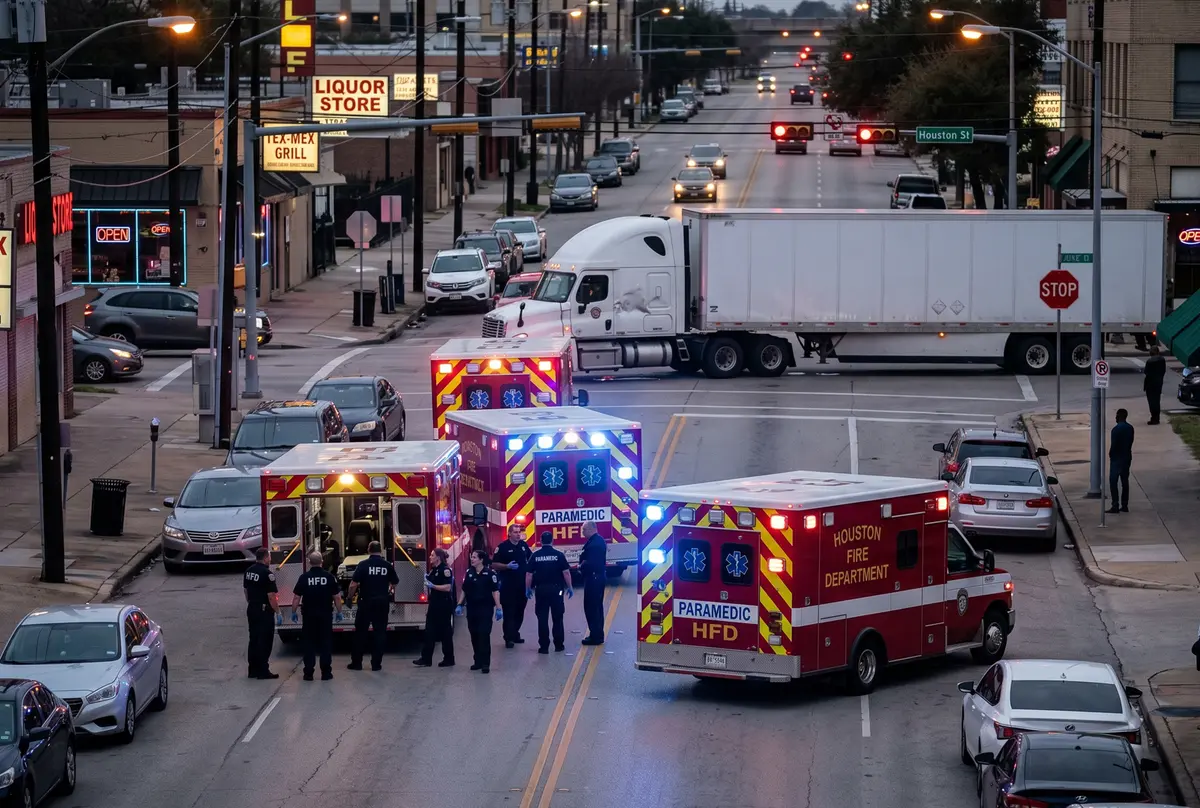
If you were injured in a Houston truck accident, a truck accident attorney can protect your rights under Texas law, identify all liable parties, and pursue the full compensation you are owed before the two-year statute of limitations runs out. Texas leads the nation in fatal truck accidents, and in 2022 there were 38,621 commercial vehicle crashes statewide, with 716 people killed in accidents involving commercial vehicles according to Texas Department of Transportation data. Houston — and Harris County in particular — sees more commercial truck traffic than almost any other metro area in the country, which is why these cases are both common and legally complex.
In my experience advising clients after serious collisions, the weeks immediately following a truck accident are the most critical and the most confusing. Insurance companies move fast, preservation letters need to go out quickly, and most people do not yet know their rights or the specific federal rules that govern commercial motor carriers. This article explains why specialized legal representation matters after a Houston truck accident, what Texas law requires, what the process looks like, and what to expect when it comes to costs.
What You Are Facing After a Houston Truck Accident
A truck collision is not a scaled-up car crash. It is a legally distinct event governed by federal trucking regulations, state tort law, and the practical reality that commercial insurers have teams on the ground within hours. You are likely dealing with significant property damage, catastrophic injuries that may require long-term care, lost wages, and the stress of handling it all while trying to recover.
The aftermath often brings confusion about how to report the accident, preserve evidence, and communicate with insurance adjusters whose goal is to minimize your claim. Many victims focus solely on recovery and only later realize they have compromised their legal position — often by giving a recorded statement, signing a medical release that is broader than necessary, or missing a Texas-specific deadline. Calculating the true value of a claim means assessing current medical bills, lost income, future medical needs, reduced earning capacity, and non-economic damages like pain, suffering, and loss of enjoyment. Without experienced counsel, that calculation rarely ends in your favor.
Texas Personal Injury Law: What You Need to Know
Texas truck accident cases turn on three core legal principles: the statute of limitations, proportionate responsibility, and federal trucking regulations. Each one has a direct, measurable impact on the outcome of your case.
The Two-Year Statute of Limitations
Under Texas Civil Practice and Remedies Code § 16.003(a), you generally have two years from the date of the injury to file a personal injury lawsuit. The statute states a person "must bring suit… not later than two years after the day the cause of action accrues." For wrongful death claims arising from a truck accident fatality, § 16.003(b) also provides a two-year deadline, measured from the date of the injured person's death. Missing the deadline almost always means losing the right to recover, no matter how strong the underlying case is.
Texas's Modified Comparative Fault (51% Bar)
Texas follows a modified comparative fault rule under Texas Civil Practice and Remedies Code § 33.001. The statute reads: "In an action to which this chapter applies, a claimant may not recover damages if his percentage of responsibility is greater than 50 percent." In practical terms, this is called the 51% bar rule. If you are 50% or less at fault, your damages are reduced by your percentage of fault. If a jury finds you 20% at fault on a $100,000 claim, your recovery is reduced to $80,000. If they find you 51% at fault, you recover nothing. This is why insurance adjusters work hard to shift blame — every percentage point they can attribute to you reduces what they pay.
Identifying Every Liable Party
Truck accident liability often extends well beyond the driver. Potentially responsible parties include the trucking company (under theories of negligent hiring, training, or supervision, as well as vicarious liability for the driver's negligence), the truck's owner if separate from the driver, the maintenance contractor, the manufacturer of defective equipment, the cargo loader, and in some cases the shipper. Each may carry separate insurance policies, and identifying every possible defendant is often the difference between adequate and full compensation.
Federal Trucking Regulations
Commercial truck drivers and motor carriers are subject to the Federal Motor Carrier Safety Regulations, enforced by the Federal Motor Carrier Safety Administration (FMCSA). These cover hours of service, electronic logging, vehicle maintenance, drug and alcohol testing, and driver qualifications. A documented violation — for example, hours-of-service logs showing the driver was over limit at the time of the crash — is often direct evidence of negligence and can support claims for gross negligence and punitive damages.
Texas Truck Accident Data at a Glance
| METRIC | FIGURE | SOURCE |
| Commercial vehicle crashes in Texas (2022) | 38,621 | Texas Department of Transportation |
| People killed in Texas commercial vehicle accidents (2022) | 716 | Texas Department of Transportation |
| Fatal large-truck crashes in Texas (2023) | 730 (highest in U.S.) | FMCSA / FARS |
| Statute of limitations to file | 2 years from injury date | Tex. Civ. Prac. & Rem. Code § 16.003 |
| Fault threshold to recover damages | 50% or less | Tex. Civ. Prac. & Rem. Code § 33.001 |
How the Process Works in Houston
Truck accident cases in Houston typically move through six stages. Understanding the sequence helps you prepare and avoid costly missteps.
1. Immediate Actions and Medical Care
Ensure your safety, call 911, and seek medical attention immediately — even if you feel fine. Many truck-crash injuries, including soft-tissue damage and traumatic brain injury, are not apparent in the first 24 hours. Report the crash to the Houston Police Department and, if possible, document the scene with photos, note the truck's DOT number, and get contact information for witnesses before anyone leaves.
2. Investigation and Evidence Preservation
Once you retain an attorney, one of the first steps is sending a spoliation letter to the trucking company demanding preservation of evidence. Critical materials include the truck's electronic control module (black box) data, driver logbooks, electronic logging device records, maintenance and inspection records, post-crash drug and alcohol test results, and driver qualification files. Your attorney may also coordinate with the Texas Department of Public Safety Commercial Vehicle Enforcement for inspection records.
3. Damage Assessment and Demand Letter
Your attorney works with treating physicians, life-care planners, and economists to quantify total damages — current medical bills, future care, lost wages, diminished earning capacity, pain and suffering, and any loss of consortium. A formal demand letter is then sent to the at-fault party's insurer laying out liability, damages, and a specific settlement figure.
4. Negotiations With Insurance Companies
This is often the longest phase. Adjusters for trucking insurers are experienced negotiators whose primary incentive is minimizing payouts. Your attorney handles communications, responds to counteroffers, and presents the evidentiary record to push toward a fair settlement. If negotiations stall, filing suit becomes the next step.
5. Filing Suit and Litigation
If settlement fails, your attorney files a personal injury lawsuit in the appropriate court — often a Harris County District Court. Litigation involves discovery (written questions, document requests, and depositions), expert designations, motion practice, and usually a court-ordered mediation before trial.
6. Trial or Final Settlement
The vast majority of personal injury cases resolve before a verdict. If yours does not, your attorney presents the case to a jury, which decides liability and damages. Texas juries can award economic damages, non-economic damages, and — in cases of gross negligence supported by clear and convincing evidence — punitive damages.
What Legal Representation Typically Costs
Cost is one of the first concerns people raise, and in Houston it is usually less of a barrier than expected. Texas truck accident attorneys almost universally work on a contingency fee basis, meaning you pay nothing upfront. The attorney is paid only if they recover compensation for you, either by settlement or court award. If there is no recovery, you generally owe no attorney's fee.
The contingency percentage typically ranges from 33.3% to 40%, and often increases if the case proceeds to trial — reflecting the additional time, expert costs, and risk. Separate from the fee, case expenses include court filing fees, deposition and court reporter costs, expert witness retainers, medical record retrieval, and accident reconstruction. Most firms advance these costs and recover them from the settlement or judgment before calculating the contingency fee. The specifics of contingency arrangements vary by state and case; for a detailed breakdown of how contingency fees work in practice, see this guide to personal injury lawyer costs. During your initial consultation, ask any prospective attorney to walk through both the fee percentage and the expense structure in plain terms.
| COST TYPE | DESCRIPTION | WHEN PAID |
| Contingency fee | 33.3%–40% of the settlement or award; often higher if the case goes to trial | Only if you recover |
| Case expenses | Court fees, expert witnesses, depositions, records, investigation | Reimbursed from recovery |
| Initial consultation | Most Houston firms offer free consultations | No cost |
What to Look for in a Houston Truck Accident Attorney
Four practical criteria separate firms that are genuinely equipped for these cases from those that handle them occasionally.
Specific Truck Accident Experience
Look for an attorney with a demonstrated record in commercial motor vehicle cases — not just general car accidents. Truck cases involve federal regulations, larger policy limits, and specialized evidence like ELD data and driver qualification files. Ask directly: "How many truck accident cases have you tried or settled, and what were the ranges of recovery?"
Houston and Harris County Familiarity
An attorney who regularly practices in Harris County District Courts knows the judges, local court procedures, and the insurance adjusters who handle these claims. Ask: "Are you familiar with the Harris County civil district courts and the carriers you would be negotiating with on my case?"
Resources to Take on Trucking Companies
Commercial truck cases are capital-intensive. The firm you choose should have the financial resources to advance six-figure case costs when necessary, plus access to accident reconstructionists, biomechanical engineers, medical experts, and experienced trial lawyers. Ask what expert witnesses they typically retain and whether they have the ability to try the case if settlement fails.
Communication and Accessibility
You should leave the initial meeting confident that the attorney will keep you informed. Ask: "Who will be my main point of contact, how often will I receive updates, and what is your typical response time to client calls or emails?"
Common Mistakes People Make After a Truck Accident
Delaying Medical Treatment
Gaps in medical care are one of the first things adjusters use to argue that injuries were minor or unrelated. See a doctor the day of the crash and follow through on all recommended treatment.
Giving a Recorded Statement to the Trucking Insurer
Adjusters for the at-fault insurer are not neutral. They are trained to elicit statements that can be used later to reduce or deny the claim. Do not give a recorded statement before consulting an attorney.
Losing or Failing to Preserve Evidence
Photos, witness contacts, dashcam footage, and scene notes can disappear within hours. If you are physically able, document everything before the scene is cleared. If not, an attorney can send preservation letters quickly to lock in the trucking company's records before they cycle out.
Posting on Social Media
Insurers and defense counsel monitor plaintiffs' social media. A single photo or status update can be used out of context to argue that your injuries are less serious than claimed. The safest policy after a serious accident is to stop posting entirely.
Frequently Asked Questions
How do I find a qualified truck accident attorney near me in Houston?
Search for attorneys with specific commercial truck accident experience, verify their standing with the State Bar of Texas, read verified client reviews, and take advantage of free initial consultations. The State Bar's website allows you to check any Texas attorney's license status and disciplinary history.
What compensation can I recover from a Houston truck accident claim?
Recovery in a Texas truck accident case can include current and future medical expenses, lost wages, diminished earning capacity, property damage, pain and suffering, mental anguish, and loss of consortium. In cases involving gross negligence supported by clear and convincing evidence, punitive damages may also be available.
How long does a Houston truck accident case take to resolve?
Timelines vary widely. Straightforward cases with clear liability and moderate injuries can settle in several months. Complex cases with multiple defendants, disputed liability, or catastrophic injuries often take one to three years, especially if they go to trial.
Can I still recover if I was partially at fault for the crash?
Yes, as long as you are 50% or less at fault under Texas's 51% bar rule (Tex. Civ. Prac. & Rem. Code § 33.001). Your recovery is reduced by your percentage of responsibility. If you are 51% or more at fault, you recover nothing.
What should I do immediately after a truck accident in Houston?
Call 911, seek medical attention, report the accident to the Houston Police Department, photograph the scene, collect witness information and the truck's DOT number, and avoid discussing fault with anyone except the police. Contact a truck accident attorney before speaking with any insurance adjuster.
How much does a Houston truck accident attorney charge?
Most Houston truck accident attorneys work on a contingency fee of 33.3% to 40% of the recovery, with no upfront cost. You pay the fee only if your attorney recovers compensation for you. Case expenses are typically advanced by the firm and reimbursed from the settlement or judgment.
Who can be held liable in a Texas truck accident?
Potentially liable parties include the truck driver, the motor carrier, the truck owner, the maintenance provider, the cargo loader, the shipper, and, in cases of defective equipment, the manufacturer. A thorough investigation often identifies multiple defendants and multiple insurance policies.
Is there a deadline to file a Houston truck accident lawsuit?
Yes. Under Texas Civil Practice and Remedies Code § 16.003, you generally have two years from the date of injury to file a personal injury lawsuit. Wrongful death claims also carry a two-year deadline, measured from the date of death. Certain exceptions — including tolling for minors and incapacitated persons — may apply.
Disclaimer
This content is for general informational purposes only, is not legal advice, and does not create an attorney-client relationship. Readers should consult a qualified attorney licensed in their jurisdiction for advice specific to their situation. AttorneyReview works with a network of law firms across the United States. If you need help with your case, get matched free with a qualified attorney.
A Houston truck accident can upend your health, finances, and future in an instant. The legal and factual complexity of these cases — federal regulations, multiple defendants, aggressive insurance defense, and a strict two-year deadline — is why experienced local counsel is not a luxury but a practical necessity. The sooner you act, the more evidence your attorney can preserve and the stronger your claim becomes.
To find qualified legal help, search for a Personal Injury attorney on AttorneyReview.com. You can also narrow your search to attorneys practicing in Houston, Texas to find local representation familiar with Harris County courts, or use our Get Matched service to connect with a vetted truck accident attorney in your area.
Need a Personal Injury Attorney?
Get matched with pre-screened attorneys in your area. Free to use, no obligation.
Get Matched Free