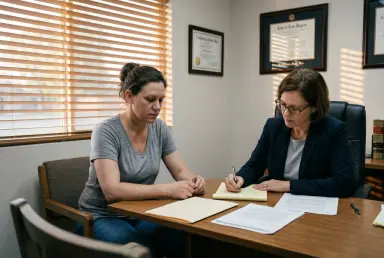
How to Find a Good Family Law Attorney in San Jose, CA

Need a Family Law Attorney?
Get matched with pre-screened attorneys in your area. Free to use, no obligation.
Get Matched Free
Finding the right family law attorney in San Jose can directly shape the outcome of your divorce, custody case, or support dispute. A skilled California family law attorney does more than file paperwork — they protect your parental rights, advocate for your financial interests, and guide you through one of the most difficult experiences of your life.
If you are navigating a family law matter in Santa Clara County, this guide explains what to expect from the California legal process, how cases move through the San Jose courts, what to look for in an attorney, and the questions you should ask before hiring anyone.
What California Family Law Cases Typically Involve
Family law in San Jose covers legal matters involving marriage, children, and domestic relationships. The most common cases include dissolution of marriage (divorce), legal separation, child custody and visitation, child support, spousal support (alimony), and the division of community property.
Community property and separate property. California is a community property state. Under California Family Code Section 760, all property acquired by a married person during the marriage while domiciled in California is generally considered community property — meaning it is owned equally by both spouses, and typically divided 50/50 at divorce. Separate property, defined under Family Code Section 770, includes assets owned before marriage, received as a gift or inheritance, or acquired after the date of separation. Understanding this distinction is critical to protecting your financial future.
Child custody. For cases involving children, California Family Code Section 3020 establishes the court's guiding policy: the health, safety, and welfare of children is the primary concern in all custody decisions. The law also strongly favors arrangements that allow frequent and continuing contact with both parents — unless doing so would not be in the child's best interest. Every custody decision a San Jose judge makes flows from this foundational principle.
Spousal support. Spousal support is governed by the factors listed in Family Code Section 4320. Courts weigh these factors to determine the amount and duration of support. They include the length of the marriage, each party's earning capacity, the standard of living during the marriage, the supported spouse's ability to become self-supporting, and the supporting party's ability to pay. Child support follows California's statewide guideline formula, which accounts for each parent's income and the time each parent spends with the child.
How the Family Law Process Works in San Jose
Family law cases in San Jose are handled by the Superior Court of California, County of Santa Clara, primarily at the Family Justice Center Courthouse. While every case is different, most divorce and custody matters move through the following stages.
1. Petition Filing and Service One party initiates the case by filing a Petition for Dissolution of Marriage or a Petition to Establish Parental Relationship with the Santa Clara County Superior Court. The other party must then be formally served with the documents according to California's legal service requirements — a step that must be completed correctly to avoid procedural delays.
2. Response Once served, the responding party has 30 days to file a formal Response with the court. This document sets out their position on the issues raised in the petition and any counter-requests they wish to make. Failing to respond within this window can result in a default judgment against the non-responding party.
3. Temporary Orders Either party may request temporary orders from the court early in the case addressing urgent issues such as child custody and visitation, child support, spousal support, and temporary use of the family home. These orders take effect immediately and remain enforceable until a final agreement or judgment is entered.
4. Mandatory Financial Disclosures Both parties are legally required to exchange complete financial disclosures — including income and expense declarations, schedules of assets and debts, and supporting documentation. Hiding assets or providing inaccurate information in these disclosures is a serious legal violation that can result in court sanctions and significant damage to your credibility before the judge.
5. Case Management Conferences The court schedules Case Management Conferences (CMCs) to check case status, identify unresolved issues, and set deadlines for future proceedings. These hearings help keep the case on track and give the judge early visibility into where the parties agree and where disputes remain.
6. Mediation and Alternative Dispute Resolution Santa Clara County strongly encourages — and for child custody and visitation matters, often mandates — mediation through Family Court Services before a judge will hear contested issues. Mediation gives both parties the opportunity to reach a mutually acceptable agreement outside of a courtroom. Many cases also use private settlement conferences or collaborative law processes to resolve disputes more efficiently and with less emotional cost.
7. Discovery If the case remains contested, attorneys may conduct formal discovery to gather information. This can include written interrogatories, document requests, subpoenas for financial records, and depositions of parties or witnesses. Discovery is especially important in cases involving significant assets, business interests, or disputed income.
8. Trial If the parties cannot reach a full settlement, the case proceeds to trial. A judge — not a jury — hears testimony and reviews evidence before issuing rulings on all outstanding issues, including custody, support, and property division.
9. Judgment Once all issues are resolved — either by agreement or by judicial order — a formal Judgment is prepared and filed with the court. This document legally finalizes the case. Under California Family Code Section 2339(a), no divorce can be finalized until six months have expired from the date the respondent is served with the petition (or the date of their appearance in the case, whichever comes first). Note that this clock starts at service, not at the date of filing.
Contested cases often take well over a year to reach final judgment. Having an attorney who knows the Santa Clara County court system — including its local rules, judicial officers, and Family Court Services procedures — is a meaningful advantage throughout this process.
What It Typically Costs to Hire a Family Law Attorney in San Jose
The cost of a family law case in San Jose varies widely depending on complexity, whether the matter is contested, and the attorney's experience level. Most family law attorneys in California charge by the hour. Hourly rates in the San Jose area typically range from $250 to $600 or more for experienced practitioners.
Most attorneys also require an upfront retainer — a deposit held in a trust account from which fees are drawn as work is performed. Initial retainers commonly range from $3,000 to $10,000 or higher for cases involving significant assets or contentious custody disputes. The retainer is a starting deposit, not the total cost of your case. As it is depleted, you may be asked to replenish it.
For simple, uncontested matters, some attorneys offer flat fees. However, flat-fee arrangements are uncommon in family law because disputes are inherently unpredictable. Always ask any attorney you consult to explain their full fee structure — including how they bill, what the retainer covers, how often you will receive invoices, and what happens when the retainer runs out.
What to Look for in a San Jose Family Law Attorney
Choosing the right family law attorney is one of the most important decisions you will make. Here are the key qualities to evaluate.
California Family Law Experience — Specifically in Santa Clara County Look for an attorney with substantial, verifiable experience in California family law and a demonstrated familiarity with Santa Clara County's court system, local rules, and judicial preferences. Local knowledge matters — an attorney who regularly appears in the Family Justice Center Courthouse will know procedural nuances that can affect your case at every stage.
Clear Communication and Responsiveness You need an attorney who listens carefully, explains legal concepts in plain language, and keeps you consistently informed. Poor communication is one of the most common complaints clients have about attorneys — and in a family law case, being left in the dark adds unnecessary stress. Ask during your consultation how often you can expect updates and who will be your primary point of contact.
Professional Reputation Research the attorney's reputation before hiring. Client reviews, peer endorsements from other attorneys, and their standing with the State Bar of California can reveal a great deal about their competence, ethics, and effectiveness. You can verify any California attorney's license status and disciplinary history through the State Bar's public website at calbar.ca.gov.
Approach to Conflict Resolution Not every family law matter needs to go to trial. Ask prospective attorneys how they typically approach dispute resolution. An attorney who prioritizes negotiation, mediation, and settlement when appropriate can save you significant time, money, and emotional strain. At the same time, you need someone who is fully prepared to litigate if settlement is not possible or not in your best interest.
Alignment with Your Goals Your attorney's philosophy and strategy should reflect what you are trying to achieve. If your priority is preserving a cooperative co-parenting relationship, you may want an attorney who leans toward collaborative approaches. If you are facing a high-conflict situation involving serious disputes over custody or significant assets, you need someone with strong litigation experience. Be honest about your goals from the first conversation.
Questions to Ask During Your Initial Consultation
Most family law attorneys offer an initial consultation. Use this time to evaluate whether they are the right fit. Consider asking:
- How many family law cases have you handled in Santa Clara County courts?
- What is your approach to resolving child custody disputes?
- How do you communicate with clients, and how quickly do you typically respond?
- Who in your office will be working on my case day to day?
- What is your honest assessment of my situation based on what I have told you?
- What outcome do you think is realistic, and what would it take to get there?
- How do you handle cases that become more complex or contested than initially expected?
A confident, experienced attorney will answer these questions directly and honestly — without overpromising outcomes or pressuring you to retain them on the spot.
Common Mistakes to Avoid in a California Family Law Case
Waiting Too Long to Seek Legal Advice Many people delay consulting an attorney because they hope things will resolve on their own or because they feel overwhelmed. Early legal consultation allows your attorney to identify urgent issues, advise on temporary orders, and build a stronger case strategy. If you are served with legal papers, you typically have only 30 days to respond — missing that deadline can have serious consequences.
Hiding or Misrepresenting Financial Information California family law requires both parties to make full and accurate financial disclosures under penalty of perjury. Concealing assets, understating income, or omitting debts is a serious legal violation. Courts have broad authority to sanction parties who are found to have been dishonest in their disclosures, and the damage to your credibility before the judge can affect every aspect of your case.
Posting on Social Media or Engaging in Public Conflict Anything you post on social media — or say in text messages, emails, or voicemails — can potentially be used as evidence in your case. Arguing with your co-parent in ways that can be documented, or posting content that reflects poorly on your judgment, can influence custody evaluations and court decisions. When in doubt, say nothing you would not want a judge to read.
Disobeying Court Orders Even if you disagree with a temporary court order, you must comply with it. Violating a court order can result in contempt proceedings, fines, or a loss of credibility with the court that can follow you throughout the rest of the case.
Focusing on "Winning" Instead of Resolution Approaching your family law case as a battle to be won rather than a problem to be solved almost always leads to higher legal fees, longer timelines, and worse outcomes for everyone involved — especially children. The goal should be a resolution that is sustainable and serves your family's long-term wellbeing.
Frequently Asked Questions
How do I find a good family law attorney in San Jose?
Look for an attorney with specific experience in California family law and the Santa Clara County Superior Court system. Check their State Bar of California license status, read client reviews, and schedule consultations with at least two or three candidates before deciding. Prioritize someone who communicates clearly and whose approach aligns with your goals.
What documents should I bring to my first consultation?
Bring your marriage certificate, birth certificates for your children, recent pay stubs, your last two to three years of tax returns, and statements for bank accounts, retirement accounts, real estate, and debts. Also prepare a brief timeline of key events and a list of your questions. The more information you bring, the more useful your consultation will be.
How long does a divorce take in California?
Under California Family Code Section 2339(a), no divorce can be finalized until six months have expired from the date the respondent is served with the petition. Simple, uncontested cases may be completed close to that minimum timeline. Contested cases involving significant assets or child custody disputes often take one to two years or longer.
Can I represent myself in a California family law case?
You have the legal right to represent yourself, but family law cases in California are procedurally complex and emotionally demanding. Self-represented parties frequently make mistakes in filings, disclosures, and courtroom procedure that result in less favorable outcomes. In cases involving child custody, significant property, or spousal support, the cost of an attorney is almost always worth it.
What is community property in California?
Community property is all property acquired by either spouse during the marriage while domiciled in California, as defined by California Family Code Section 760. At divorce, community property is generally divided equally between the spouses. Separate property — assets owned before marriage, received as gifts or inheritance, or acquired after separation — is not subject to division and is defined under Family Code Section 770.
How is child custody decided in California?
Under California Family Code Section 3020, courts make custody decisions based on the best interest of the child, prioritizing the child's health, safety, and welfare. Judges strongly favor arrangements that allow children to maintain frequent and continuing contact with both parents, unless there is a specific reason — such as abuse, neglect, or domestic violence — that makes such contact harmful.
What factors does a judge consider for spousal support in California?
Under California Family Code Section 4320, courts weigh multiple factors including the length of the marriage, each spouse's earning capacity, the standard of living during the marriage, the supported spouse's ability to become self-supporting, and the supporting party's ability to pay. There is no fixed formula for spousal support — it is determined on a case-by-case basis.
Do I have to go to mediation in Santa Clara County?
For contested child custody and visitation issues, yes. Santa Clara County's Family Court Services provides mandatory mediation before a judge will hear disputed custody matters. This mediation is separate from any private mediation the parties may choose to pursue for other issues such as property division or support.
What happens if my spouse hides assets during our divorce?
Hiding assets in a California divorce is a serious violation of the mandatory financial disclosure requirements. If discovered, the offending party can face court sanctions, adverse rulings, and may be required to pay the other party's attorney's fees. In egregious cases, a judge may award the non-offending spouse a greater share of the concealed assets.
What is the difference between legal separation and divorce in California?
In a divorce, the marriage is legally terminated and both parties are free to remarry. In a legal separation, the court can divide property, establish support, and set custody arrangements — but the marriage itself remains intact. Some couples choose legal separation for religious, financial, or health insurance reasons.
This content is for general informational purposes only, is not legal advice, and does not create an attorney-client relationship. Readers should consult a qualified attorney licensed in California before taking any action. AttorneyReview works with a network of law firms across the United States. If you need help with your case, get matched free with a qualified attorney.
Facing a family law matter in San Jose? Search for a qualified family law attorney in your area on AttorneyReview.com, or use the "Get Matched" feature to be connected with a licensed California family law attorney who can evaluate your specific situation.
Need a Family Law Attorney?
Get matched with pre-screened attorneys in your area. Free to use, no obligation.
Get Matched Free