
e.l.f. Cosmetics Slack-Fill Class Action: What Consumers Need to Know

Need a Consumer Protection Attorney?
Get matched with pre-screened attorneys in your area. Free to use, no obligation.
Get Matched Free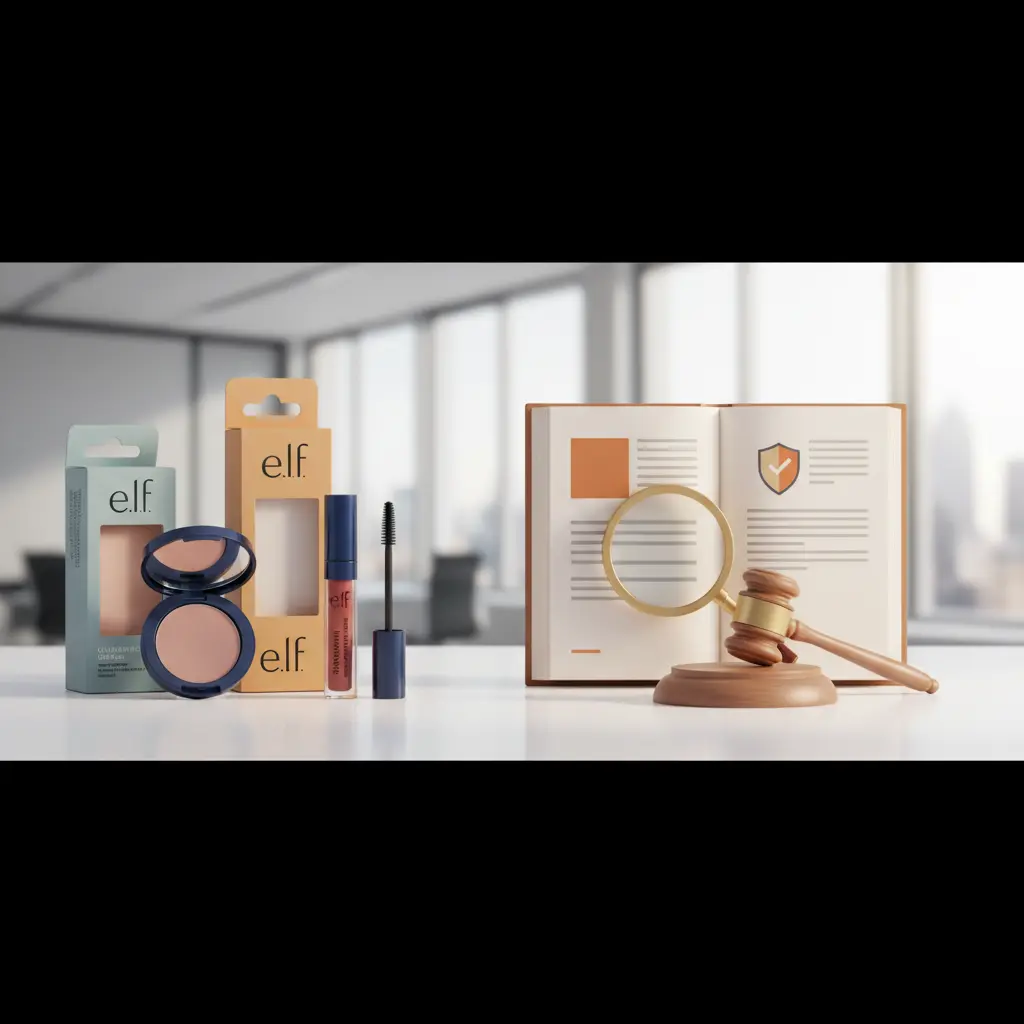
A proposed class action lawsuit filed in California federal court alleges that e.l.f. Cosmetics misled consumers by selling two of its products — the Holy Hydration! Gentle Peeling Exfoliant and the Glossy Lip Stain — in oversized containers that are significantly less than full. The lawsuit claims this practice, known as nonfunctional slack-fill, caused consumers to pay premium prices for empty space. If you purchased either product in California within the past four years, you may be a member of the proposed class.
What the e.l.f. Cosmetics Lawsuit Alleges
The class action was filed in the U.S. District Court for the Central District of California by lead plaintiff Geneva Gonzales, a California resident who purchased both the Holy Hydration! Gentle Peeling Exfoliant and the Glossy Lip Stain at a Target store in Norwalk, California. According to the 32-page complaint, the containers for both products are substantially larger than the amount of product they hold — with some containers alleged to be up to 50% empty.
The lawsuit contends that e.l.f.'s opaque packaging prevents consumers from seeing the actual contents before purchase. There are no fill lines, transparency windows, or other indicators that would allow a shopper to determine how much product is actually inside. A reasonable consumer viewing the packaging, the complaint argues, would expect a container filled commensurate with its size — and that expectation is what the lawsuit claims was violated.
Gonzales states that had she known about the slack-fill, she either would not have purchased the products or would not have paid the premium price charged for them. The lawsuit seeks to represent all California residents who purchased either product containing nonfunctional slack-fill within the state over the past four years.
What Is Slack-Fill and When Is It Illegal?
Slack-fill is the difference between the actual capacity of a container and the volume of product it contains — in plain terms, the empty space inside the package. Not all slack-fill is illegal. Federal and California law distinguish between functional slack-fill, which serves a legitimate purpose, and nonfunctional slack-fill, which serves no purpose other than to make a product appear larger than it is.
Under federal law, 21 C.F.R. § 100.100, a container that does not allow the consumer to fully view its contents is considered misleading if it contains nonfunctional slack-fill. The regulation identifies six circumstances in which slack-fill is considered functional and therefore permissible: protecting the contents during shipping, requirements of the manufacturing machinery, unavoidable product settling during transit, the need for the container to perform a specific function in the product's use, reusable containers with independent value, and the physical inability to increase fill or reduce package size.
If none of these six justifications applies, the empty space is classified as nonfunctional slack-fill — and the container is considered misleading under federal law. For cosmetics specifically, the Federal Food, Drug, and Cosmetic Act at 21 U.S.C. § 362(d) provides that a cosmetic is misbranded if its container is made, formed, or filled so as to be misleading.
California law adds an additional layer of protection. California Business and Professions Code § 12606 explicitly prohibits nonfunctional slack-fill across consumer product categories, including cosmetics. That statute, combined with California's Unfair Competition Law (UCL) at Business and Professions Code § 17200, its False Advertising Law (FAL), and the Consumers Legal Remedies Act (CLRA) at California Civil Code § 1770, gives California consumers among the strongest legal tools in the country to challenge deceptive packaging.
The Legal Claims Against e.l.f. Cosmetics
The lawsuit asserts claims under California's three primary consumer protection statutes. The UCL prohibits any unlawful, unfair, or fraudulent business act or practice and applies broadly to packaging and advertising that misleads consumers about the quantity of a product. The FAL prohibits untrue or misleading statements in advertising — and California courts have consistently held that product packaging itself constitutes advertising. The CLRA prohibits specific deceptive acts in consumer transactions and, unlike the UCL, allows plaintiffs to recover actual damages, punitive damages, and attorney's fees.
Courts evaluating California consumer protection claims apply what is known as the reasonable consumer standard: whether members of the public are likely to be deceived by the practice. In the context of opaque packaging, the analysis centers on whether a reasonable consumer would rely on the size of the container as a signal of how much product is inside — a reliance that courts have recognized as objectively reasonable when no other information is provided to the buyer at the point of sale.
The e.l.f. complaint argues that the outer packaging of the Glossy Lip Stain is significantly larger than the product it contains, creating a false impression of quantity. The exfoliant is similarly alleged to be housed in a container that makes the product appear more substantial than it is. Because neither container allows the consumer to view the contents before purchase, and because no fill lines or transparency indicators are present, the lawsuit contends that consumers had no reasonable means of knowing they were buying a substantially empty container.
A Pattern in the Cosmetics Industry
The e.l.f. case is not the first time a cosmetics company has faced slack-fill litigation. Maybelline and L'Oréal were previously sued for packaging certain concealers and face powders in oversized containers — a case that resulted in a settlement. The pattern reflects a broader litigation trend: consumers and their attorneys are paying closer attention to cosmetic and personal care packaging, and California's consumer protection statutes provide a well-developed litigation pathway.
The cosmetics industry presents particular challenges for consumers in this context. Products are frequently packaged in opaque jars, tubes, and bottles that conceal their contents. Outer packaging is often designed for shelf appeal rather than accurate volumetric representation. And the premium positioning of many cosmetic brands means that price alone does not signal how much product a consumer is actually receiving.
The e.l.f. brand has built its market identity around accessible pricing and value. The lawsuit's allegation that the company charged premium prices for containers that were significantly empty strikes at that identity directly — and it is precisely the kind of deception that California's consumer protection framework was designed to address.
Who Is Included in the Proposed Class
The proposed class covers all California residents who purchased e.l.f.'s Holy Hydration! Gentle Peeling Exfoliant or Glossy Lip Stain containing nonfunctional slack-fill within California during the four years preceding the filing of the lawsuit. The four-year lookback period is consistent with the statute of limitations under California's Unfair Competition Law.
The lawsuit remains a proposed class action at this stage. For it to proceed as a class action, the court must certify the class — a procedural determination that the claims of the named plaintiff are sufficiently representative of the proposed class members to justify collective litigation. Class certification in slack-fill cases typically requires the plaintiff to demonstrate that the alleged deception was uniform across the class (meaning every purchaser encountered the same packaging) and that damages can be calculated on a class-wide basis.
If the class is certified and the case proceeds, class members would generally be notified and given the opportunity to participate in or opt out of any eventual settlement or judgment. In many consumer class actions, individual class members receive modest monetary relief — coupons, partial refunds, or small cash payments — while attorneys' fees represent a larger portion of the total settlement value. The more significant outcome for consumers is often injunctive relief: a court order requiring the company to change its packaging practices going forward.
What Consumers Should Do Now
If you purchased e.l.f.'s Holy Hydration! Gentle Peeling Exfoliant or Glossy Lip Stain in California within the past four years, you do not need to take any immediate action to preserve your potential class membership. In most consumer class actions, putative class members are automatically included unless they affirmatively opt out after receiving class notice.
Keeping documentation of your purchase — such as receipts, credit card statements, or loyalty program records showing the transaction — is advisable. If the class is eventually certified and a settlement is reached, proof of purchase may be required to receive any monetary benefit, depending on the terms of the settlement agreement.
If you believe you were harmed by the packaging and want to understand your individual legal rights beyond participation in the class action, consulting a consumer protection attorney can help you assess whether an individual claim or other legal options are available in your specific circumstances.
Frequently Asked Questions About the e.l.f. Cosmetics Slack-Fill Lawsuit
What is the e.l.f. Cosmetics class action lawsuit about?
The lawsuit alleges that e.l.f. Cosmetics sold its Holy Hydration! Gentle Peeling Exfoliant and Glossy Lip Stain in oversized containers that are significantly less than full, misleading California consumers into paying premium prices for products with substantially more empty space than a reasonable buyer would expect.
What is nonfunctional slack-fill?
Nonfunctional slack-fill is empty space in a product container that serves no legitimate purpose — such as protecting the contents, accommodating machinery requirements, or reflecting unavoidable settling. Under federal law at 21 C.F.R. § 100.100 and California law at Business and Professions Code § 12606, nonfunctional slack-fill in opaque containers is considered deceptive and is prohibited.
Which e.l.f. products are named in the lawsuit?
The lawsuit names two specific products: the e.l.f. Holy Hydration! Gentle Peeling Exfoliant and the e.l.f. Glossy Lip Stain. Both are alleged to be sold in opaque containers that are significantly larger than the amount of product they contain.
Who can join the e.l.f. slack-fill class action?
The proposed class includes all California residents who purchased the Holy Hydration! Gentle Peeling Exfoliant or the Glossy Lip Stain containing nonfunctional slack-fill within California during the four years before the lawsuit was filed. The class has not yet been certified by the court.
Do I need to do anything to be part of the class action?
Not at this stage. If the class is certified, affected consumers will typically receive a formal notice explaining the lawsuit, their rights, and how to participate in or opt out of any settlement. Retaining proof of purchase is recommended in case documentation is required to receive a monetary benefit.
What laws protect California consumers from deceptive packaging?
California consumers are protected by several overlapping statutes: the Unfair Competition Law (Business and Professions Code § 17200), the False Advertising Law, the Consumers Legal Remedies Act (Civil Code § 1770), and the Fair Packaging and Labeling Act (Business and Professions Code § 12606). Together, these laws prohibit nonfunctional slack-fill and other deceptive packaging practices, and they provide pathways for both individual and class action lawsuits.
What can consumers recover in a slack-fill class action?
Potential remedies in a successful slack-fill class action include actual damages (typically a price premium refund), restitution, injunctive relief requiring the company to change its packaging, statutory damages under the CLRA, punitive damages in egregious cases, and attorney's fees. Individual monetary recoveries in consumer class actions are often modest, while injunctive relief can have broader impact.
Has e.l.f. Cosmetics responded to the lawsuit?
As of the time of publication, no public response from e.l.f. Cosmetics specifically addressing the slack-fill class action has been reported. The case remains in its early stages. Defendants in class action lawsuits typically have the opportunity to respond to the complaint and may file motions to dismiss before any class certification hearing takes place.
Are other cosmetics companies facing similar lawsuits?
Yes. Slack-fill litigation in the cosmetics industry is not new. Maybelline and L'Oréal previously faced a class action over oversized packaging for certain cosmetic products, which resulted in a settlement. The e.l.f. case reflects a continued pattern of consumer protection litigation targeting opaque cosmetic packaging that allegedly misrepresents product quantity.
What should I do if I think a product I bought used deceptive packaging?
If you believe a product you purchased was sold in a misleadingly oversized container, you may want to consult a consumer protection attorney to discuss your options. In California, you may have claims under the UCL, FAL, or CLRA depending on the specific facts. Documenting your purchase and retaining the product and its packaging can support any future claim.
This content is for general informational purposes only, is not legal advice, and does not create an attorney-client relationship. Readers should consult a qualified attorney licensed in their jurisdiction. AttorneyReview works with a network of law firms across the United States. If you need help with your case, get matched free with a qualified attorney.
If you believe you were affected by deceptive product packaging, search for a qualified consumer protection attorney on AttorneyReview.com.
Not sure where to start? Use our Get Matched feature to connect with a vetted attorney suited to your consumer protection needs.
Need a Consumer Protection Attorney?
Get matched with pre-screened attorneys in your area. Free to use, no obligation.
Get Matched Free