
California Wildfire 2026: Insurance Claims, Evacuation Rights, and When to Call a Lawyer

Need an Insurance Law Attorney?
Get matched with pre-screened attorneys in your area. Free to use, no obligation.
Get Matched Free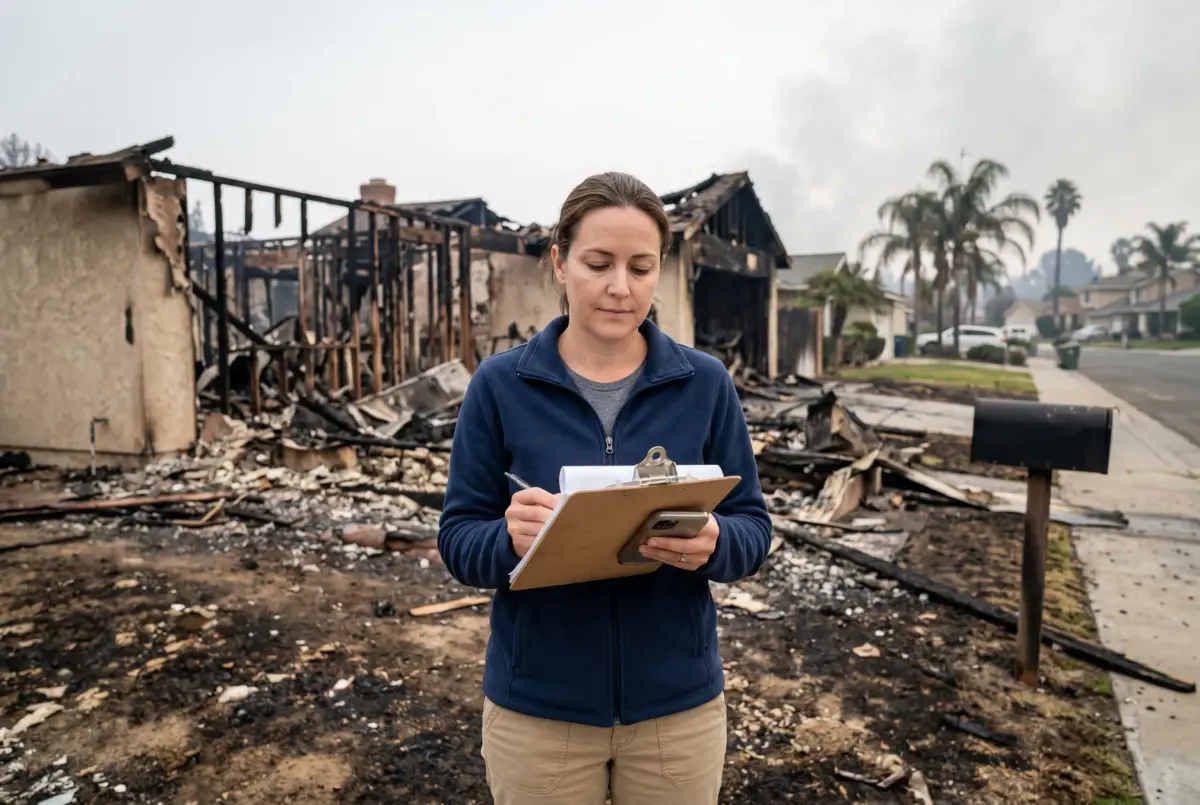
If a California wildfire damages or destroys your home, you have three immediate priorities under state law: file a written claim with your insurer without unnecessary delay, secure additional living expense (ALE) payments to cover temporary housing for up to 24 months, and document every loss before the 60-day proof-of-loss deadline runs. California's wildfire-specific insurance protections — codified in Insurance Code §§ 2051.5, 2060, and 2071 — are among the strongest in the country, but they require homeowners and renters to act inside fixed statutory windows. Missing them can cost you tens or hundreds of thousands of dollars in coverage.
Right now, as the Cal Fire incident map shows active blazes in Simi Valley and Riverside County and tens of thousands of residents under evacuation orders, the question is not whether to file a claim — it is which protections apply, in what order, and when an insurer's behavior crosses the line into bad faith. This guide walks through the four legal frameworks every California wildfire victim should understand: state insurance code rights, evacuation and tenant protections, utility liability, and the price gouging rules that take effect the moment the Governor declares a state of emergency.
California's May 2026 Wildfires: Current Status
As of May 20, 2026, three active wildfires are burning across Southern California. The Sandy Fire in Simi Valley has burned more than 1,600 acres, making it the third largest wildfire in California this season. The Bain Fire near Jurupa Valley has reached nearly 1,400 acres with 25% containment. Combined, these fires have triggered evacuation orders for approximately 43,000 residents across Ventura and Riverside counties.
Cal Fire reports that crews have responded to more than 1,400 wildfires statewide in 2026, scorching over 32,000 acres and destroying seven structures. Real-time evacuation orders, perimeter maps, and shelter locations are published on the official Cal Fire incidents portal and the California Governor's Office of Emergency Services (Cal OES) site.
What California Insurance Law Requires After a Wildfire
California Insurance Code Section 2071 — the state's standard form fire insurance policy statute — sets the foundational rules every homeowner's policy must follow. The statute requires the insured to give written notice of any loss to the insurance company without unnecessary delay, protect the property from further damage, and produce an inventory of destroyed, damaged, and undamaged property.
The critical deadline is the proof of loss: a sworn statement, signed by the insured, that itemizes the time and origin of the loss, the actual cash value of each item, and the amount of loss claimed. Under Cal. Ins. Code § 2071, the proof of loss must be rendered within 60 days after the loss — unless the insurance company extends that period in writing.
Section 2071 also contains a one-year suit limitation provision: no suit or action on the policy for recovery of any claim shall be sustainable unless commenced within 12 months after the inception of the loss. Your policy may provide a longer period, but never shorter. Calendar these dates the moment you file.
Insurer Deadlines Under California Regulations
Beyond the policyholder's obligations, California insurers must follow strict timelines under the Fair Claims Settlement Practices Regulations at 10 Cal. Code Regs. § 2695.5–2695.7:
- Acknowledge receipt of a claim within 15 days
- Provide claim forms and begin investigating within 15 days
- Respond to letters, calls, and emails from the insured within 15 days
- Accept or reject the claim, in whole or in part, within 40 days of receiving proof of claim
- Provide written reasons for any denial
- Notify the insured at least 60 days before any statute of limitations or contractual deadline the insurer may rely on to deny a claim
A pattern of missed deadlines, lowball offers, or unjustified denials may support a bad faith claim under California common law and Insurance Code Section 790.03, which prohibits unfair claims settlement practices.
Additional Living Expenses: 24 Months in a Declared Emergency
When the Governor declares a state of emergency under California Government Code Section 8558 — as has happened repeatedly in response to major wildfires — Insurance Code Section 2051.5 expands two critical homeowner protections.
First, additional living expense coverage (ALE) — the portion of a homeowner's policy that pays for temporary housing, meals, and other costs incurred while the insured is displaced — must be available for no less than 24 months from the inception of the loss. Under Cal. Ins. Code § 2051.5(b)(2), the insurer must grant an extension of up to 12 additional months — for a total of 36 months — if the insured, acting in good faith and with reasonable diligence, encounters delays in the reconstruction process beyond their control.
Second, the policyholder has at least 36 months from the first actual cash value payment to collect the full replacement cost, with additional six-month extensions for good cause. These statutory minimums override any shorter time limits printed in the policy.
The Right to Rebuild at a New Location
Many wildfire victims do not want to rebuild on the same lot. California Insurance Code Section 2051.5(c) gives policyholders the right to replace a destroyed home by buying or rebuilding at a different location. The insured remains entitled to the extended or guaranteed replacement cost portion of the policy even when relocating, and the insurer cannot deduct the value of the land from a replacement home purchase.
This right has been on the books since 2004, but California Department of Insurance bulletins have repeatedly reminded adjusters that it applies — particularly to out-of-state adjusters who may not be familiar with the statute. If an adjuster tells you that relocating forfeits your replacement cost coverage, that statement is incorrect as a matter of California law.
Renters' Rights and Habitability After a Wildfire
Renters whose units are damaged or destroyed by a California wildfire have substantial protections under California's implied warranty of habitability, codified at Civil Code § 1941.1. A rental unit must be fit for human occupancy, with effective weatherproofing, working plumbing and electrical systems, and protection from environmental hazards.
When wildfire damage — including significant smoke contamination, soot, structural damage, or loss of utilities — renders a rental unit uninhabitable, California Civil Code Section 1942 gives the tenant two remedies after providing the landlord with written or oral notice and a reasonable time to repair:
- Make the repair and deduct the cost from rent, provided the repair does not exceed one month's rent (available no more than twice in any 12-month period)
- Vacate the premises and be discharged from further rent obligations as of the vacate date
If the unit is completely destroyed, the tenant is not obligated to pay rent, and California law requires the landlord to return any prepaid rent and the security deposit within 21 days under Cal. Civ. Code § 1950.5(g).
California Penal Code 396: Price Gouging Protections
The moment the President, the Governor, or a local executive declares a state of emergency, California Penal Code Section 396 caps price increases on essential goods and services. The basic rule: no business may sell housing, consumer food, emergency supplies, building materials, medical supplies, transportation, hotel lodging, or related services for more than 10 percent above the price charged immediately before the emergency declaration.
The 10 percent cap applies for 30 days after the proclamation for most goods and services. For repair, reconstruction, and emergency cleanup services — the categories most relevant to wildfire rebuilding — the protection lasts 180 days, and the Governor or local officials may extend either period in 30-day increments.
For rental housing specifically, Section 396 prohibits landlords from increasing rent by more than 10 percent above what was advertised, offered, or charged to an existing or prospective tenant. A landlord cannot accept rent above the cap even if a displaced tenant offers to pay more. Violations are misdemeanors punishable by up to one year in county jail, a fine of up to $10,000, or both, and also constitute unfair business practices under Business and Professions Code Section 17200.
Suspected price gouging can be reported to the California Attorney General's Public Inquiry Unit or the local district attorney.
Utility Liability and Inverse Condemnation
When a wildfire is caused by utility infrastructure — such as power lines, transformers, or downed equipment — California law imposes some of the strictest liability standards in the United States. Under the doctrine of inverse condemnation, a public utility whose equipment substantially causes property damage can be held liable for that damage even without a finding of negligence. The doctrine has been applied repeatedly in California wildfire litigation against major investor-owned utilities.
Owners and renters whose property is destroyed by a utility-caused fire generally have two parallel paths to recovery:
- File the homeowner's or renter's insurance claim immediately for covered losses
- Preserve a separate civil claim against the utility for damages not covered by insurance, including diminished property value, displacement costs, emotional distress, and personal injury
The California Public Utilities Commission opens formal investigations into utility-ignited fires, and CAL FIRE's investigative reports — published months after a fire — frequently establish the evidentiary foundation for civil litigation. Cause-of-fire determinations are available through Cal Fire's investigation summaries on the Cal Fire website.
Documenting Your Loss: The Evidence That Wins Claims
Insurance adjusters work from documentation, not memory. California fire victims who recover their full policy limits almost always share one trait: meticulous, contemporaneous records. After a wildfire, prioritize the following:
- Photograph or video the property — exterior, interior, attached structures — before any cleanup begins
- Build a room-by-room inventory of personal property with quantities, approximate purchase dates, and replacement cost estimates
- Save every receipt for evacuation lodging, meals, clothing, pet boarding, and other displacement expenses — these support the ALE claim
- Request a complete certified copy of the policy from the insurer in writing (a right confirmed by Insurance Code Section 2071)
- Keep a single log of every call, email, and letter exchanged with the adjuster, including date, time, and substance
- Never sign a release or waiver to receive a benefit payment — full policy benefits are not contingent on signing away rights
The California Department of Insurance maintains a wildfire claims guide and a consumer hotline at 1-800-927-4357. Survivors of declared disasters may also be eligible for FEMA Individual Assistance through DisasterAssistance.gov.
When Bad Faith Becomes a Separate Claim
California recognizes a tort cause of action for insurance bad faith — distinct from a breach of contract claim — when an insurer unreasonably denies, delays, or underpays a claim. Bad faith damages can include the unpaid policy benefits, consequential financial losses, emotional distress, attorney's fees under the rule in Brandt v. Superior Court, and, where the insurer's conduct is willful or oppressive, punitive damages under Civil Code Section 3294.
Patterns that frequently support a bad faith claim include unjustified delays in coverage decisions, lowball offers contradicted by the insurer's own estimates, refusal to communicate, denial of ALE benefits during a declared emergency, and failure to advance the four months of ALE that Insurance Code Section 2060 requires when a primary residence is rendered uninhabitable.
Credit and Financial Recovery After Displacement
Wildfire displacement creates cascading financial pressure that can damage credit scores within weeks: missed payments while mail is rerouted, depleted savings, sudden reliance on credit cards. Federal law gives consumers the right to a free credit report from each of the three major credit bureaus, and policyholders should monitor reports closely during reconstruction. Our partner site Credit Saint publishes a free guide to credit that covers how to dispute inaccuracies and protect a score through a financial disruption.
Insurers cannot cancel a homeowner's insurance policy while the home is being rebuilt, and Insurance Code Section 675.1 requires the insurer to offer renewal for at least 24 months after a disaster loss. Insurers also cannot non-renew property in any ZIP code within or adjacent to a fire perimeter for one year after a state of emergency is declared, based solely on the fire risk.
Key California Wildfire Insurance Protections at a Glance
| PROTECTION | STATUTE KEY | DEADLINE |
| Proof of loss to insurer | Cal. Ins. Code § 2071 | 60 days after loss |
| Insurer accept or deny claim | 10 Cal. Code Regs. § 2695.7 | 40 days from proof of claim |
| Additional Living Expenses | Cal. Ins. Code § 2051.5(b)(2) | 24 months minimum, up to 36 months |
| Time to collect replacement cost | Cal. Ins. Code § 2051.5(b)(1) | 36 months from first ACV payment |
| Suit limitation on policy | Cal. Ins. Code § 2071 | 12 months from inception of loss |
| Rent and price increases capped | Cal. Pen. Code § 396 | 10% cap for 30 days (180 for reconstruction) |
| Insurer renewal obligation | Cal. Ins. Code § 675.1 | 24 months from loss |
When to Talk to an Attorney
Most wildfire claims do not require litigation. The cases that do tend to share specific markers: total losses, disputed cause-of-fire determinations, insurer behavior that fits the bad faith pattern, or recovery against a third party such as a utility. If any of the following has happened in the first 60 days after the loss, a consultation with a California-licensed insurance attorney is warranted:
- The insurer has denied coverage on a major component of the loss
- The insurer has offered a settlement substantially below the policy limit or below independent contractor estimates
- The insurer has refused to advance four months of ALE for a uninhabitable primary residence
- The insurer is past the 40-day deadline to accept or reject the claim with no written explanation
- The fire was caused by utility equipment or another identifiable third party
- The landlord has demanded rent for an uninhabitable unit, or attempted to evict during the price gouging protection window
Most California insurance attorneys work on contingency for policyholder cases, and California's Brandt rule allows the recovery of attorney's fees as a component of bad faith damages.
Frequently Asked Questions
How long do I have to file a wildfire insurance claim in California?
Notice must be given to the insurer without unnecessary delay. A sworn proof of loss must be filed within 60 days of the loss under Cal. Ins. Code § 2071. Any lawsuit on the policy must be commenced within 12 months from the inception of the loss, unless the policy provides longer.
What is "additional living expenses" coverage?
Additional living expenses (ALE), sometimes called loss of use coverage, is the portion of a homeowner's or renter's policy that reimburses temporary housing, meals, and incremental costs incurred while the insured is displaced. In a declared state of emergency, California Insurance Code § 2051.5(b)(2) requires a minimum of 24 months of ALE coverage, with up to 12 additional months for delays beyond the insured's control.
Can my landlord raise my rent because of the wildfire?
No. California Penal Code § 396 caps rent increases at 10% above the previously advertised or charged amount during a declared state of emergency, for 30 days after the declaration. The cap may be extended by the Governor or local officials. A landlord cannot accept rent above the cap even if a tenant offers to pay more.
What if my rental unit is uninhabitable after smoke or fire damage?
Under California Civil Code §§ 1941.1 and 1942, a tenant whose unit is rendered uninhabitable may, after written or oral notice to the landlord, either repair and deduct the cost from rent (up to one month's rent), or vacate the premises and be discharged from further rent obligations. If the unit is completely destroyed, the tenant owes no further rent, and the landlord must return the security deposit and any prepaid rent within 21 days.
Can I rebuild my home in a different location and still collect full replacement cost?
Yes. California Insurance Code § 2051.5(c) gives policyholders the right to replace a destroyed home by buying or rebuilding at a different location, including the extended or guaranteed replacement cost portion of the policy. The insurer cannot deduct the value of the land from a replacement home purchase.
What is insurance bad faith?
Insurance bad faith is a separate tort under California law that applies when an insurer unreasonably denies, delays, or underpays a covered claim. Damages can include the unpaid benefits, consequential financial loss, emotional distress, attorney's fees recoverable under Brandt v. Superior Court, and in cases of willful or oppressive conduct, punitive damages.
What happens if the wildfire was caused by a utility company?
Under California's inverse condemnation doctrine, a public utility whose equipment substantially causes property damage can be held liable even without proof of negligence. Affected property owners and renters can file separate civil claims against the utility for damages not covered by insurance, including diminished property value, emotional distress, and personal injury.
Can my insurer cancel my policy after a wildfire claim?
No. California Insurance Code § 675.1 requires insurers to offer to renew the policy for at least 24 months after a disaster-related total loss. Insurers also cannot non-renew property in any ZIP code within or adjacent to a fire perimeter for one year after a declared state of emergency, based solely on wildfire risk.
What should I do if my insurer is unresponsive?
Document every missed deadline in writing, including the 15-day acknowledgment requirement and the 40-day accept-or-reject deadline under 10 Cal. Code Regs. § 2695.7. File a complaint with the California Department of Insurance consumer hotline at 1-800-927-4357, and consult a California-licensed insurance attorney about a potential bad faith claim.
Where can I find official evacuation and wildfire updates?
Real-time wildfire incident information, evacuation orders, and perimeter maps are published on the Cal Fire incidents portal at fire.ca.gov and the California Governor's Office of Emergency Services at caloes.ca.gov. Local sheriff's departments and the National Weather Service issue regional alerts.
Disclaimer
This content is for general informational purposes only, is not legal advice, and does not create an attorney-client relationship. Readers should consult a qualified attorney licensed in their jurisdiction. AttorneyReview works with a network of law firms across the United States. If you need help with your case, get matched free with a qualified attorney.
If you have been affected by a California wildfire, you can search for an Insurance Law attorney in California on AttorneyReview.com.
You can also connect directly with attorneys in your area through our Get Matched service for a free, no-obligation case review.
Need an Insurance Law Attorney?
Get matched with pre-screened attorneys in your area. Free to use, no obligation.
Get Matched Free